

Access to Action:
Positioning Women for AfCFTA Recap
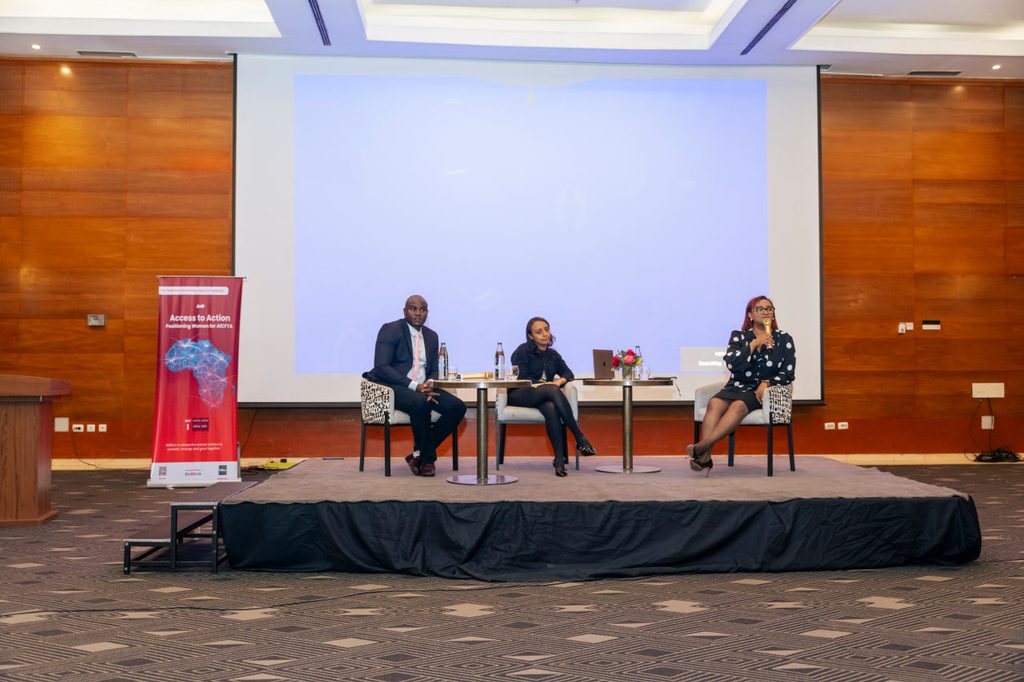
AWiB creates a space where people come together, connect, and engage in meaningful conversations. The ambiance is one of openness, curiosity, and exchange, bringing participants together from different sectors and experiences. Each month, AWiB brings conversations that are current, relevant, and relatable to its members and the wider community.
This October, the conversation focused on the African Continental Free Trade Area (AfCFTA) and what a more connected African economy could mean for women.
The evening opened with an introduction from Tsion Gebremedhen, AWiB’s 2026 President. She introduced AWiB as a professional community that has grown into a trusted source of insight and a space for friendships, connections, and business partnerships. She highlighted AWiB’s motto, Responsible Leadership, and its Lighthouse Sessions, which create space for reflection, deep discussion, constructive feedback, and learning together.
Tsion also introduced members and guests to AWiB’s membership benefits, including partner offers and the Knowledge Hub, where members and the wider community can access AWiB’s events, articles, and other resources. She also highlighted the Fund for AWiB raffle, a fundraising initiative supporting AWiB’s programs and platform.
Tsion then introduced Tigist Hailu, the moderator for the evening and a regional diplomacy, peace, security, and strategic communication expert with more than two decades of experience across African and international institutions, including the African Union and the United Nations.
Tigist opened the conversation by engaging the audience and asking how many participants were already doing business with other African countries and how many were hearing about AfCFTA for the first time.
She explained that, at its simplest, AfCFTA is about making it easier for African countries to trade goods and services, invest in one another’s economies, and create greater value within the continent. She highlighted the scale of the agreement, noting that it brings together 54 African countries, while also pointing to the relatively low level of intra-African trade and the continued export of African products in raw form.
For Tigist, the central question was not simply what AfCFTA is, but what it means for women. She encouraged participants to consider where they fit within the opportunities created by a more connected African market and what they need to do to access them.
Tigist then introduced Menna Haile, Program Manager at the Pan-African Chamber of Commerce and Industry Agency, whose work focuses on AfCFTA implementation, private sector engagement, intra-African trade, women’s participation, and market access. She also introduced Evance Rabere, a trade and enterprise development professional with more than a decade of experience supporting women-led businesses to strengthen their competitiveness and expand into regional and international markets.
Tigist asked Menna where Ethiopia currently stands in AfCFTA implementation and what ratification means for businesses.
Menna explained that signing and ratifying AfCFTA is only the beginning. Countries also need the systems and mechanisms that allow businesses to use the agreement in practice. She highlighted tariff schedules, rules of origin, customs procedures, and institutional arrangements as important parts of implementation.
She emphasized the distinction between having an agreement in place and having the information, systems, and capacity needed for businesses to benefit from it.
Tigist then asked Evance how a company should approach entering another African market.
Evance shared a practical example involving an Ethiopian food product exploring the Rwandan market. He explained that research revealed existing products, different price points, quality levels, and established supply chains that the Ethiopian product would need to compete with.
The experience showed the importance of understanding consumer preferences, purchasing power, competition, distribution channels, pricing, regulations, and potential local partners before entering a new market.
Evance also emphasized collaboration and the importance of engaging government ministries, private sector organizations, chambers, and sector associations. These connections can provide valuable information and reduce some of the risks and costs of entering an unfamiliar market.
He also shared examples of initiatives that expose women-led SMEs to African markets, allowing them to explore opportunities, meet potential partners, and understand market requirements before committing significant resources.
Tigist then shifted the conversation toward professionals and service providers, asking how people whose businesses are based on expertise rather than physical products can benefit from AfCFTA.
The discussion highlighted that AfCFTA is not limited to physical goods. Consultants, technology professionals, health practitioners, and other service providers can explore opportunities across African markets. At the same time, licensing, professional qualifications, and other sector-specific requirements need to be understood.
Menna explained that mutual recognition arrangements can play an important role in allowing professional qualifications and services to be recognized across participating countries.
The discussion also turned to women’s participation in regional trade. Menna and Evance highlighted barriers related to finance, information, infrastructure, networks, and institutional support. They emphasized that awareness of opportunities is not enough. Women also need practical information, connections, and resources to act on those opportunities.
Menna encouraged businesses to first understand their own readiness and then identify the markets, requirements, buyers, suppliers, and partners relevant to their next step.
The audience brought practical questions from different sectors into the conversation, including professional services, health, cross-border payments, digital trade, and access to information.
Menna pointed participants toward chambers, sector associations, government institutions, and other trade-support organizations as potential sources of information and connections. The discussion also touched on the Pan-African Payment and Settlement System and the growing importance of digital trade, including e-commerce, digital services, payments, and related regulations.
One participant, a psychologist, medical consultant, and writer, asked whether books published in English could reach readers across Africa through AfCFTA opportunities. The response noted that books could be connected to communication-related opportunities and encouraged her to consider digital distribution, alongside marketing and creating awareness among potential readers.
Another participant asked about organizing events that bring people from different African countries together. The discussion highlighted how service providers can also use their expertise, networks, and services to connect African markets.
Across the questions, one message stood out: AfCFTA opportunities are not limited to traditional exporters. Professionals, service providers, technology companies, and event organizers can also explore regional opportunities when they understand the requirements and position themselves accordingly.
As the session came to a close, Tigist invited the panelists to share their final reflections. The discussion returned to the importance of preparation. AfCFTA is creating opportunities, but businesses and professionals need to understand where they stand, identify relevant opportunities, and take practical steps toward accessing them.
The evening closed with a clear message: AfCFTA creates opportunities, but benefiting from them requires preparation, information, networks, and action.
In keeping with AWiB’s culture of recognizing and appreciating those who contribute to its conversations, Milky Mamo, AWiB 2025/2026 Board Member, presented tokens of appreciation to Tigist Hailu, Menna Haile, and Evance Rabere, acknowledging the time, knowledge, and experience they shared with the AWiB community.
The evening ended with an invitation to not only understand the opportunities within a more connected African market, but to consider where each participant can position herself and take action.
Share with your Circle!
I am Etenesh from Berhan Lehetsanat I wonder I I missed this meeting Please check invitation emails gor futute.Yhamks. I also want to join the breakfast meeting.When is it mostly.