

Men Allies: Changing the Narrative Recap
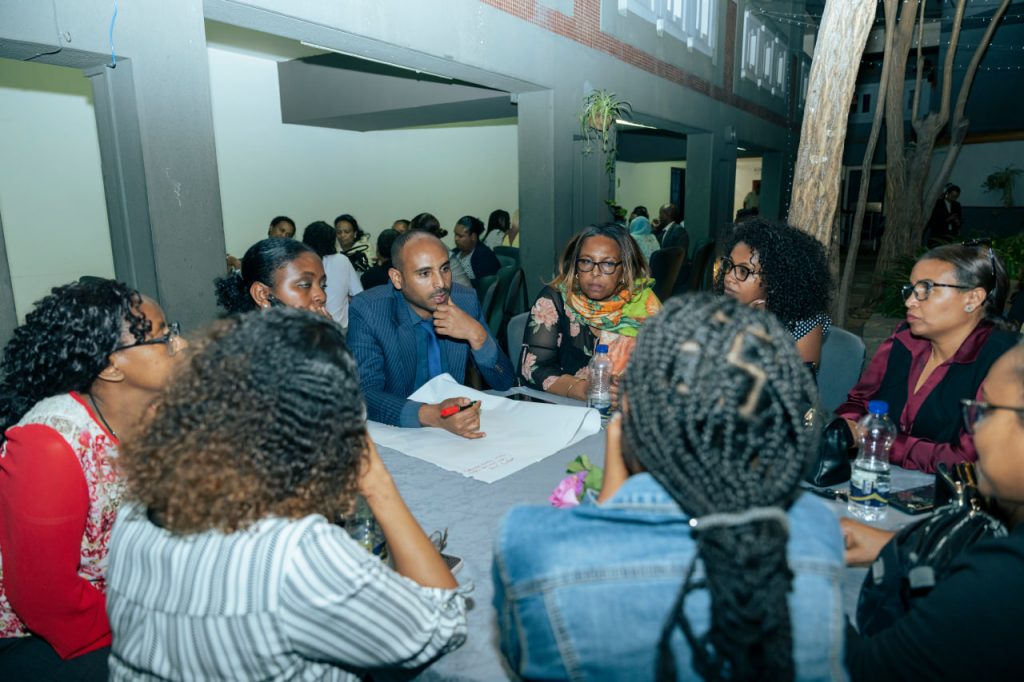
It is easy to believe in equality. It is harder to act on it when a promotion is being decided, when a colleague’s idea is repeated by someone louder, or when the dishes are still waiting at the end of a long day. That gap, between what a man believes and what he does, sat quietly at the centre of AWiB’s November gathering.
The evening’s theme was “Men Allies: Changing the Narrative.” Its premise was simple and, for some, still unfamiliar, inclusive workplaces and communities cannot be built by women alone. Men shape decisions, hold influence, mentor, recognise and promote. What they choose to do with that influence matters.
One of the first moments of the night made the point without a speech. Early in her welcome, the host asked the men in the room to raise their hands. As they did, the room celebrated them, not as guests at someone else’s conversation, but as participants in a shared one. For a monthly forum that has brought Addis Ababa’s professional community together for more than 15 years and over 150 events, it was a fitting way to signal what the night would be about.
The host also reminded guests of the idea that anchors every AWiB gathering, Responsible Leadership. Over the next few hours, that phrase would take on a particular meaning. Responsibility, it turned out, was not something to hand to women and wish them well. It was something to carry together.
The evening was made possible by Merit Properties, and Mahlet Melesse introduced the organisation and its offerings to guests. Guests also heard about the AWiB Raffle Fundraising Campaign, which builds toward its grand finale on December 3, and thanked the raffle sponsors for their support. Together, these partners are a reminder that a community like AWiB is sustained by many hands. Shared effort was also the heart of the evening’s conversation.
The conversation was then guided by Roman Gomeju Tafessework, who brought two perspectives to it. As a former head of Jupiter Hotels and Kuriftu Chain Resorts, and now Conference Manager at UNOPS, she understands how workplaces are actually run. As a volunteer for women and children for more than 20 years, and a longtime AWiB board member and mentor, she understands what inclusion asks of them.
She began not with a critique but with gratitude. Roman paid tribute to the many men who stand behind the progress of the women in their lives, husbands, brothers, fathers, friends, colleagues and mentors. Among them she counted her own husband, a man who actively supports women. AWiB, she noted, appreciates such men throughout the year, and November is the month it sets aside to celebrate them openly.
The warmth was deliberate, and it set the tone. But Roman was equally clear about what allyship asks of a person. Fair and inclusive workplaces, she said, are built through everyday effort and shared responsibility. Men allies play a role no one else can fill. They stand up for equal opportunity, amplify voices that are too often overlooked, share opportunities, and help women shine. Above all, they move beyond good intentions and show their support in what they actually do.
With that, the evening’s central thread was set. The real measure of an ally is not what he says about inclusion. It is what he does when a decision, an opportunity or a moment of bias calls on him to act.
Why do men matter in advancing women’s inclusion?
The first question sounded almost too obvious to ask, the answers began with arithmetic. Men are half of society, and no change affecting everyone can move far while half of everyone stands aside. They also hold a large share of the seats where decisions are made, in leadership, in government, in workplaces and in communities. Influence over norms tends to follow influence over institutions, and men have both.
But the discussion quickly moved past the boardroom. Participants kept returning to the home. Inequality, they observed, rarely begins at work. It is learned earlier, in who clears the table and who is asked about their ambitions, and it later reappears in who is interrupted in meetings and who is passed over for the stretch assignment. The way a father shares responsibility, and the way he speaks to his daughters and sons, shapes what the next generation will assume is normal.
That link between private habits and public outcomes gave the conversation its weight. Women, participants noted, need support not only in their careers but in the household and caregiving work that so often limits how far a career can go. A man who shares that load at home is already practising allyship, whether or not he would call it that.
At work, the expectations were concrete. Recognise women’s contributions. Listen to their perspectives. Give credit where it is due. Offer equal access to mentorship, recognition and growth. Men who do this visibly also become role models, showing other men that supporting inclusion is a mark of good leadership rather than a concession.
The benefits, participants agreed, do not stop with women. Inclusion strengthens families, workplaces and communities. And because men and women often bring complementary perspectives, leadership and decision-making improve when both are fully at the table. Allyship, in this light, is less a favour than an investment in a society that works better for everyone.
How can leaders respectfully interrupt bias, advocate for fairness, and create psychological safety without becoming defensive or dismissive?
The first conversation asked why, the second asked what it takes. Most people in a room like this already know that bias is unfair. The harder question is whether they will say so when it costs them something, a comfortable silence, a friendly relationship with a senior colleague, or the ease of doing things the way they have always been done. The discussion explored how leaders can challenge bias respectfully, advocate for fairness and build environments where people feel safe to speak.
Participants agreed that the work starts with the self. Before anyone can change a system, they must recognise their own biases and understand where those biases come from. That means questioning traditional assumptions and the gender labels attached to roles, and noticing the cultural expectations placed on men as well as women. Personal change comes first. Awareness, education and behaviour change communication can then carry that shift outward into wider social norms.
The workplace was the next frontier, and here the ideas became practical. Gender policies matter, but only if they are actually implemented. Gender-awareness training, transparent and fair decision-making, and equal access to leadership and development opportunities all help. Participants also named the quieter obstacles, office politics, ego-driven behaviour and habits that discourage people from taking part. Psychological safety, active listening and open communication were offered as the antidote.
Finally, the conversation turned to the kind of leader this requires. Empathy, emotional intelligence, humility and patience came up repeatedly, along with the skill of raising sensitive issues without humiliating anyone. An inclusive leader interrupts bias when it happens, uses their influence to challenge discriminatory practices, and invests in mentorship, continuous learning and capacity development. Such leaders also build alliances with other men who can champion inclusive policies, so that the burden of speaking up does not fall on one person.
The tension running through it all was plain. Awareness is the starting point, not the finish line. Inclusion depends on leaders willing to question established practice, examine their own behaviour, and take responsibility again and again, especially when it would be easier not to.
How can men and women work together as partners to accelerate inclusion instead of treating it as a women’s agenda?
The final question reframed everything that came before it. The answer participants arrived at was that inclusion is not a contest with winners and losers. It is a shared commitment, built on mutual respect, complementary strengths and accountability on both sides.
In practice, sharing responsibility looked a lot like the themes of the evening brought together. Responsibilities are divided fairly at home and at work. Equal participation in decisions. Genuine appreciation for one another’s contributions. Deliberate openings for women to lead. Trust, respect and accountability as the ordinary conditions of working together, not special gestures.
Participants also cautioned against treating women as a single group with a single set of needs. Women are not homogeneous. Their circumstances, pressures and ambitions differ, and support that ignores those differences will miss many of them. Building a supportive environment means understanding the particular challenges women face, starting honest conversations about equality in families and communities, supporting both personal and professional responsibilities, and investing in capacity and confidence. It also means making women’s contributions visible, so that their work is seen and counted.
When the formal discussion closed, the evening did not so much end as loosen. Conversations spilled out of the roundtable. People who had arrived as strangers traded business cards and follow up plans, and points raised during the discussion were picked up again now with more candour and a good deal more laughter. This is the part of AWiB Connects that never appears on an agenda, and it is often where the most lasting connections are made.
No one left the Hilton with a finished plan for gender equality. That was never the point. What guests did take with them was a clearer sense of where allyship actually lives, in kitchens and living rooms, in hiring panels and performance reviews, in who gets the credit and who gets the next opportunity, and in the small moment when someone chooses to speak up rather than let a biased remark pass.
The narrative the evening set out to change was the one that treats inclusion as women’s work. In its place, the room sketched a different story, one in which men and women share the responsibility, the effort and the benefits. Whether that story takes hold will not be decided at a monthly gathering. It will be decided in the ordinary choices each person makes in the days that follow.
The hands raised at the start of the night were a welcome sign. The real test is what those hands do next.
Share with your Circle!
/awib
AWiB, a timely and excellent issue and the best platform for a transparent discussion. Sorry I missed the event.
Just to share based on my work and personal experience is that as I read the recap, women and men are not homogeneous and also the context and the situation of family, community and work matters. In humanitarian women take roles and responsibilities at the family, community and institution level whereas in development context is different and rightly a holistic approach is required.