

Rethinking Our Relationship with Money: A Psychological Perspective
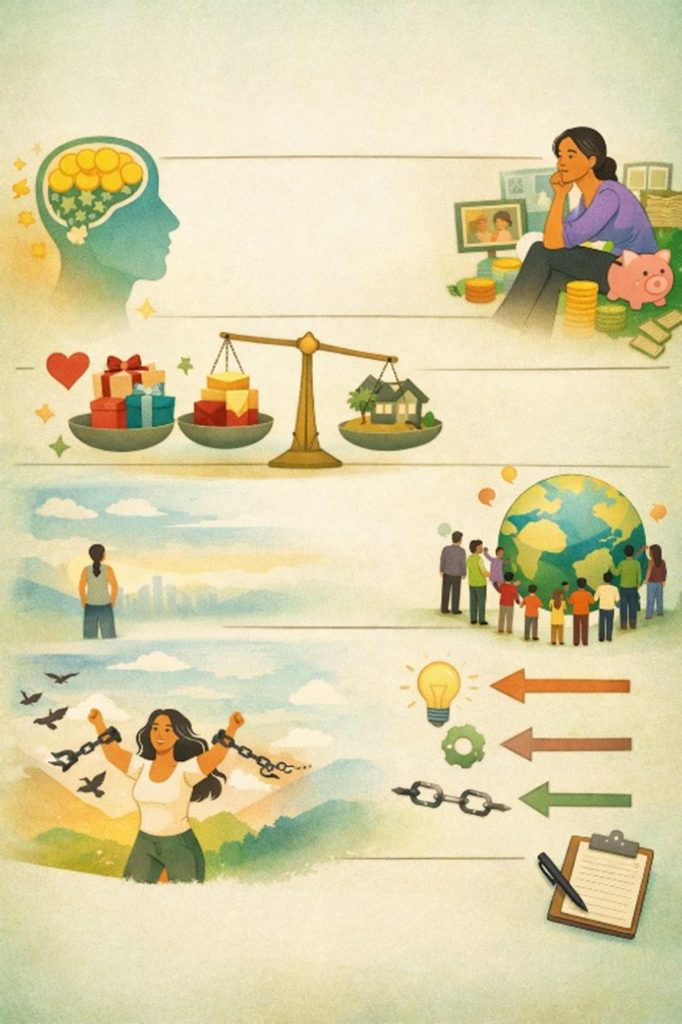
“Money is only a tool. It will take you wherever you wish, but it will not replace you as the driver.” ~ Ayn Rand
Money is often discussed in terms of numbers, budgets, salaries, investments, expenses, income, and debts. Yet beneath the surface, money is far more than arithmetic. It is a mirror reflecting our emotions, cultural narratives, and personal values. Last month, I led a round table discussion at AWiB on exploring how our relationship with money is deeply psychological, shaped by childhood experiences, cultural expectations, and the stories we tell ourselves.
This conversation was not about financial literacy in the narrow sense. It was about uncovering the hidden drivers of our financial behavior and reframing money as a tool for empowerment rather than a source of stress.
Our earliest memories of money often carry powerful emotions. For some, money was tied to scarcity and fear, parents worrying about bills or teaching children to save every coin. For others, money symbolized joy, generosity, or even pride. These emotions do not disappear; they quietly shape how we spend, save, or avoid financial decisions as adults.
Fear may lead us to hoard savings and avoid risk, but it can also reflect a healthy desire for security. Joy encourages us to spend on experiences, yet without balance, it risks overspending. Guilt or shame can make us hesitant to invest or spend, leaving us stuck in avoidance. Love and generosity inspire giving, but unchecked, they can strain personal stability. Recognizing these emotions is the first step toward shifting from reactive to intentional money management.
Money is never neutral. It reflects values. Some see money as security, others as freedom, status, or generosity. These values guide decisions about saving, spending, and investing.
For example, “Security” encourages saving but can create fear of spending. Freedom promotes independence and entrepreneurship but may foster risk-taking. Status motivates ambition but risks materialism. Generosity builds community trust but can strain finances if unbalanced.
When financial habits align with values, they bring consistency and purpose. When misaligned, they create tension both internally and in relationships.
During the session, participants reflected on their personal money stories and mapped habits to emotions and values. This exercise revealed hidden wisdom in emotions:
- Fear says, “I value security, so I will plan wisely.”
- Guilt says, “I care deeply, so I will balance generosity with sustainability.”
- Joy says, “I celebrate abundance, so I will spend intentionally.”
- Regret says, “I learn from mistakes, so I have a chance to correct them.”
By reframing emotions, money shifts from being a source of stress to a tool for growth and freedom.
Culture and family background play a profound role in shaping money values. In collectivist societies like Ethiopia, modest living, resilience, and a sense of responsibility to family and community often guide financial choices. This contrasts with more individualistic approaches in Western contexts, where independence and personal freedom dominate.
Understanding these cultural narratives helps us see that money is not just personal; rather, it is social. Conflicts in families or partnerships often arise when values clash: one partner sees money as security, the other as enjoyment. Dialogue and reflection can bridge these differences.
The heart of the discussion was reframing money as empowerment. The shift demanded viewing money not as a source of stress but as a tool for planning and growth, not as scarcity but as an opportunity for creativity and resilience, not as control but as freedom and choice. This shift requires mindfulness. Instead of reacting emotionally, spending to relieve stress, or avoiding financial planning out of fear, we can pause, reflect, and act intentionally.
The session closed with a simple yet powerful practice: each participant identified one small shift to align their financial habits with their values. Examples included: “I will track my spending weekly to reduce anxiety.” “I will set aside a generosity fund.” Such commitments will not come with radical change overnight. They require steady, mindful steps toward a healthier relationship with money.
Money is more than a currency; it is memory, emotion, culture, and value. By recognizing the hidden drivers of our financial behavior, we can transform fear into security, guilt into responsibility, and joy into sustainable freedom.
AWiB’s round table discussion reminded us that money is not an enemy to be feared or a master to be obeyed. It is a tool that, when aligned with our values, can empower us to live with purpose, resilience, and generosity. Let me finish with reflective questions for you to process on your own. What emotions arise when you think about money? Which financial habits feel aligned with your values? Which feels misaligned? Do you see money primarily as security, freedom, or enjoyment? How does your cultural and family background influence your financial choices? What trade-offs are you willing to make between personal comfort and community responsibility? These questions will deepen self-awareness, moving us beyond numbers into meaning-making.
Written by: Seble Hailu(Ph.D.)
Share to your circles!