

Self-Sabotage Recap
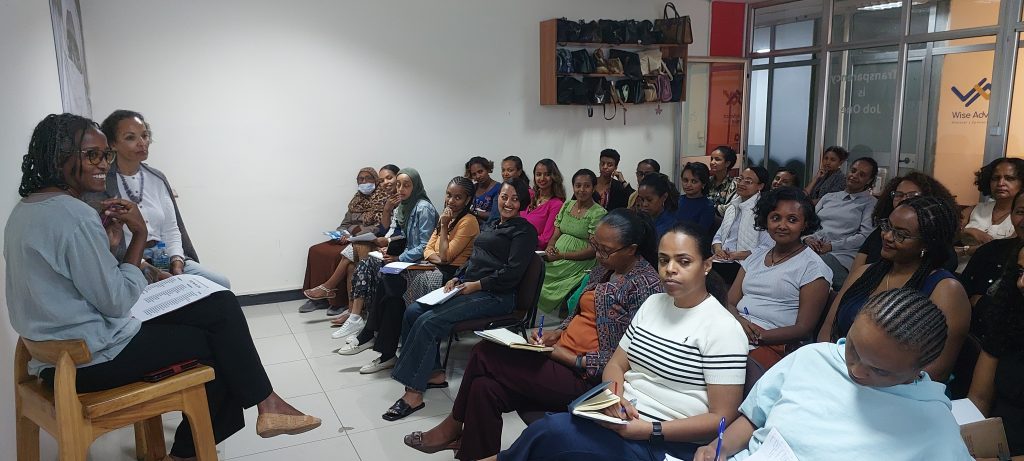
On June 20, 2026, AWiBers participated in a reflective and highly engaging conversation on Self-Sabotage, facilitated by Maskarm Haile, Recovery Coach, and Nahu S. Girma, Founder & Director of AWiB Ethiopia. The conversational session encouraged participants to explore the ways in which they may unknowingly stand in the way of their own growth, wellbeing, and success. Through open dialogue and personal reflection, participants examined the patterns and behaviors that can prevent them from reaching their full potential.
The discussion explored self-sabotage as the conscious or unconscious thoughts, behaviors, and actions that undermine personal goals and aspirations. Participants learned how many self-sabotaging patterns originate in childhood as protective mechanisms developed in response to difficult experiences. While these coping strategies may initially help individuals manage emotional pain, they can later manifest in unhealthy behaviors such as procrastination, overworking, isolation, addiction, or negative self-talk.
The session concluded with practical approaches for recognizing and breaking self-sabotaging patterns. Participants were encouraged to embrace and heal their inner child, develop greater self-awareness, and use tools such as mindfulness, breathing exercises, and emotional regulation techniques. The conversation sparked many powerful “aha moments,” reminding participants that lasting growth begins with understanding and transforming the patterns that no longer serve them.
Major Takeaways
- Self-sabotage refers to behaviors, thoughts, or actions that undermine our own success, wellbeing, and goals.
- Many self-sabotaging patterns originate from coping mechanisms developed during childhood experiences.
- Unhealed emotional wounds can manifest in behaviors such as procrastination, overworking, isolation, and other unhealthy coping strategies.
- Self-awareness is the first step toward identifying and changing self-sabotaging patterns.
- Healing practices such as mindfulness, breathing exercises, self-compassion, and inner child work can support personal growth and transformation.
Share with your Circle!