

Authentic Leadership: Embracing Your Voice Recap
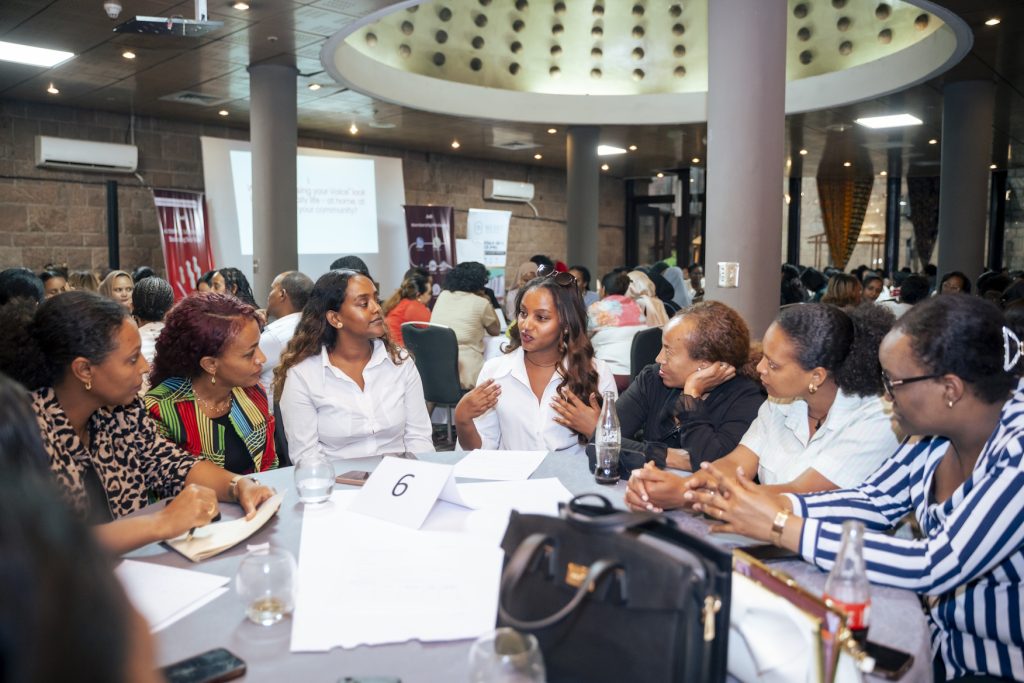
On the warm evening of May 7, AWiBers and guests gathered from 4:00 PM onwards for May’s AWiB Connects networking event. The event was themed Authentic Leadership: Embracing Your Voice. The evening brought members together in a World Café-style setting. It was designed to encourage meaningful networking and open conversations around authenticity, courage, and self-expression.
This month’s networking experience began uniquely. Leaders from the AWiB Buddy Group arrived early to support members at their assigned tables. They also helped participants have a more connected experience. Attendees reflected on what using their voice looks like at home, at work, and within their communities. They discussed situations that make authenticity difficult and habits that help them remain true to themselves when pressured to act differently.
The World Café discussions began at 6:00 PM with participants seated around circular tables, ready to exchange ideas and perspectives. Each table was guided by a host who later summarized the group’s reflections.
AWiB 2026 President, Tsion Gebremedhen, warmly welcomed participants and introduced the evening’s sponsor, Merit Properties, corporate member Nyala Insurance. She also introduced members showcasing their products: Bethel Constantinos of Enushka Design and Lule Melaku of Little Gabies.
The discussions were then opened by AWiB 2026 President-Elect Dr. Bethlehem Birhanu. She introduced the topic and framed the importance of authenticity in leadership. She noted that many people are taught to be agreeable before they are taught to be courageous.
Authentic leadership, Dr. Bethlehem shared, is about standing firmly by one’s values. It involves showing up fully as oneself. Not as the version the world expects, but as the version that is genuinely true. Authenticity, Dr. Bethlehem emphasized, is not about being loud, but about being aligned. It allows one’s voice, values, and actions to reflect who they truly are.
The first discussion question asked participants: What does “using your voice” look like in your daily life – at home, at work, or in your community?
As table hosts shared their collective reflections, participants highlighted how differently they use their voices depending on their environment. Some shared that they are expressive at home but more reserved at work due to fear of backlash or consequences. Others explained that social media has become a space where they feel more comfortable expressing themselves openly.
Many participants described using their voice as speaking their mind, challenging ideas, setting boundaries, and holding others accountable. Others mentioned listening intentionally and standing up for what they believe in.
Several women reflected on the difficulty of speaking up in male-dominated work environments. Others noted that authenticity can sometimes feel risky, especially when challenging authority. Some participants shared that AWiB has helped them become more confident in expressing themselves. It also helped them recognize that their voices matter.
Following the first round, attendees shuffled seats to continue networking with new groups. The second discussion question asked: What cultural barriers make it difficult to be authentic in our community, and how can we, as individuals, take actions that help create change?
Participants reflected deeply on the cultural messages they grew up hearing, particularly around silence and being reserved. Common sayings such as “ዝም ባለ አፍ ዝምብ አይገባም” and “ዝምታ ወርቅ ነው” were discussed as examples of how silence is often encouraged over expression. Attendees shared that women are frequently taught to remain quiet. This is often linked to being perceived as humble, respectful, or polite. At the same time, assertiveness is sometimes labeled as aggression.
Others reflected on how children are discouraged from questioning authority and how curiosity is often suppressed from an early age. Participants shared how cultural expectations affect men differently. Many are encouraged to suppress emotions and appear aggressive during conflict, even when that may not reflect how they truly feel.
In discussing solutions, participants emphasized the importance of raising awareness around these cultural barriers. They also highlighted encouraging children to ask questions freely and creating environments where people feel safe to express themselves. Others noted the importance of choosing the right timing and reflecting before speaking. Participants also mentioned documenting observations, communicating with evidence, and learning to assert healthy boundaries.
For the third and final round, participants once again shuffled seats. They reflected on a more personal question: Can you share a time when you spoke your truth despite discomfort, and how it influenced an outcome or decision?
The conversations became deeply personal as participants shared stories of challenging authority, asserting their rights, and standing against corruption. Others reflected on holding people accountable. Some participants shared experiences of advocating for themselves at work to secure promotions they had earned. Others shared experiences of going to court during disputes that arose from using their voice.
Some participants bravely shared difficult experiences where speaking up came at a personal cost. This included losing a job after expressing disagreement with a superior. Despite the challenges, many reflected on how using their voice inspired others around them. It encouraged them to question unfair practices and speak up for themselves as well.
As the evening came to a close, Dr. Bethlehem reminded participants that embracing authenticity and using one’s voice is both a choice and a worthwhile one. The session ended with participants feeling more aware of their own voices and more encouraged to embrace authenticity. Through the discussions and networking experience, they also felt more connected to fellow AWiBers.
Share to your circles!