

The ‘Uncolonized’ Mind
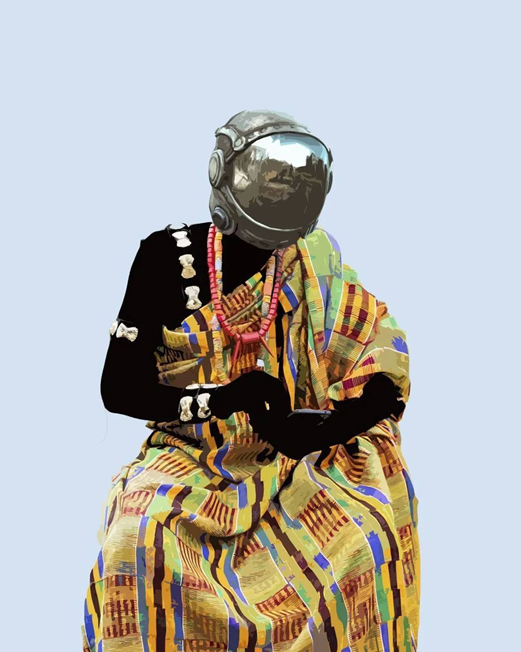
Concept by Nk’ by Nano Kwadwo Tk
The Battle of Adwa in Ethiopia shattered the myth of white invincibility and inspired black consciousness, which later on influenced pan-africanism and other anti-colonial movements. Our successful resistance to full European colonization gave us a distinct psychological profile: collective pride, a sense of divine destiny, and cultural self- confidence. I want to ask, what is the statute of limitations for such a reclamation?
Mental and cultural ‘empire hangover’ or [lack thereof] is unique to Ethiopia. Post-adwa confidence created a powerful national identity, but also created a collective exceptionalism. Our resilience, creative output, intellectual traditions, and emotional attachment to sovereignty shaped Ethiopia in ways that differed from those of much of Africa.
The four decades after our symbolic sovereignty were marked by infrastructural development and diplomatic engagement. Ethiopia joined the League of Nations, and institutions began rising within the capital. Yet, modernization was highly concentrated in the city. Deep inside the provinces, Ethiopia was still operating on a social gap between the centralized capital and the rest of the nation.
In the early 1930s, progressive Ethiopian thinkers began looking toward Japan as proof that a non-Western nation could modernize without sacrificing its cultural identity. They saw parallels between the two countries: ancient monarchies with deeply rooted traditions facing the pressure of Western imperialism. Inspired by Japan’s transformation during the Meiji era, they believed Ethiopia could evolve through adaptation rather than imitation. which leads me to Kebede Michael’s View on Pride and Modernization. [1]
In his landmark work, Japan Indemin Seletenech (How Japan Modernized), Kebede expressed deep admiration for the Meiji Restoration (1868–1912), seeing it as proof that a non-Western nation could achieve rapid industrialization and global power without “losing its soul” or cultural identity. and that pride in the Adwa victory was not a substitute for modernization, urging Ethiopia to adopt the Japanese approach to ensure its survival in the modern world. [1] His perspective feels haunting today because we still seem caught between preservation and transformation.
Modernization vs. Westernization
Besides a lack of Educational Infrastructure, Fragmented Governance, and severe financial constraints, there was significant cultural resistance because modernization was often perceived as synonymous with Westernization. [1 ] What fascinates me most is how this challenged the idea that modernization had to mean becoming Western, as though preserving identity and embracing progress were somehow incompatible. This created ambivalence among the population, who equated adopting modern practices with abandoning their cultural soul. Therefore, many resorted to the safety of a unified, domestic identity rather than risking cultural dilution.
Ultimately, the attempt to create a single, uniform identity through centralization contributed to the “national question” that would eventually lead to the collapse of the imperial and military regimes in the late 20th century. [2 ]This goes to show that even through unity, people still carry distinct histories, languages, wounds, and strengths. Trying to compress identity for the sake of stability often creates the opposite effect: fragmentation.
Maybe Ethiopia’s greatest contradiction is that we resisted external colonization while internally struggling with questions of belonging, ethnicity, and identity. In some ways, the battle shifted inward. A nation can defeat an empire militarily and still wrestle psychologically with fear and exclusion.
The primary memorial dedicated to the Battle of Adwa is the Adwa Victory Memorial, stands as a reminder that “we are the children of our fathers” who could not be stopped by strangers. Nevertheless, the question of whether Ethiopia “stopped itself” from reaching its full potential is a central theme in the reflections of its intellectuals and the lived experiences of its diverse peoples.
In today’s world, Ethiopia exists in a strange paradox: globally admired yet internally still searching for reconciliation with itself. We have settled that pride and memory alone can not sustain in the future. At times, I feel that as Habeshas, we have become more patient with outsiders than with each other. We extend curiosity, softness, and hospitality outward, yet internally, we can be deeply unforgiving toward our own people, cultures, and differences. Maybe part of Ethiopia’s healing is not only protecting our identity from the outside world, but also learning how to genuinely value and care for one another WITHIN it.
,Because a civilization cannot survive on pride alone if its people no longer feel emotionally connected to each other.
References
- https://papers.iafor.org/wp-content/uploads/papers/iice2025/IICE2025_89762.pdf?t=8
- https://interactivepasts.com/understanding-alternative-histories-the-ethiopian-japaniser-movement/
Written by: Ruth Mekasha
Share to your circles!