

The Quiet Power of Hope
ተስፋ የነፍሳችን ምግብ ነው፡፡ ~ ዶ/ር ተካልኝ ነጋ
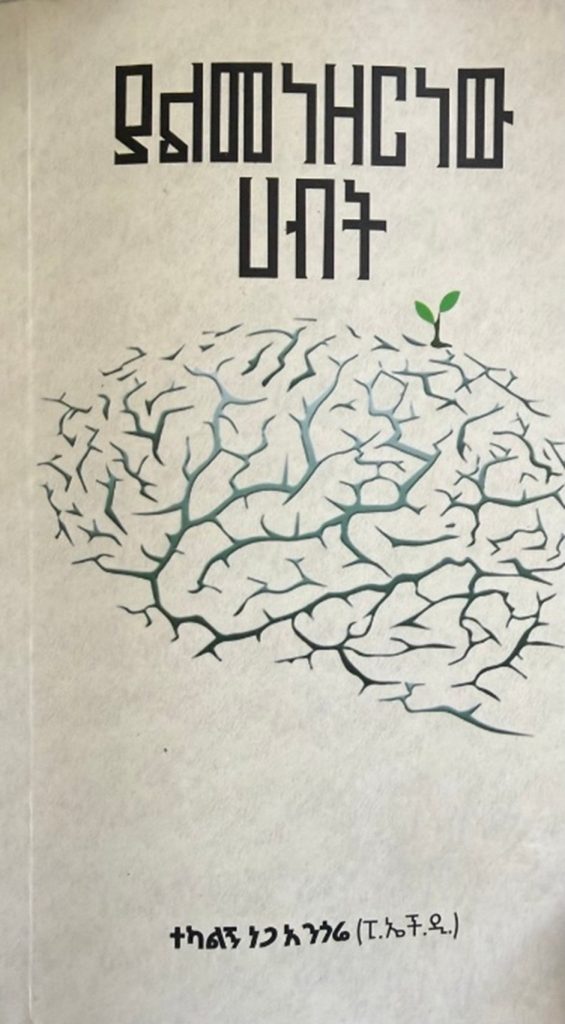
Two weeks ago, I was asked to be one of the panelists to reflect on a book called “ያልመነዘርነው ሃብት” – The untapped wealth by Dr. Tekalegne Nega, a multidisciplinary scholar. As hope is interpreted in a multi-disciplinary way philosophically, psychologically, and religiously, his book focused on the psychological aspect that reflects humanity’s quest and ability to use what is at his/her disposal.
The book shows that because hope is not loud and does not demand attention, we fail to notice that we have a resource at our disposal that counters the shouting amid the world’s noise. The writer shows how intentionally we must tap into the whispers, soft and steady hope, in moments of despair, hope is the thread that keeps us tethered to possibility, reminding us that tomorrow can be different, that the story is not finished yet.
Hope matters because life is unpredictable and we face setbacks, heartbreaks, and challenges that can make the future feel uncertain. Yet hope transforms uncertainty into opportunity. It gives us the courage to take the next step, even when the path ahead is unclear.
On a personal level, hope fuels resilience. It helps us rise after failure, heal after loss, and dream after disappointment. On a collective level, hope is the spark behind revolutions, social movements, and community rebuilding, making change possible. But, without hope, progress stalls.
We note that it is easy to lose hope when our world feels heavy. The external world is seen through pain; the news we hear revolves around cycles of conflict and destruction; when this is met with endless personal struggles, and the quiet loneliness of unmet dreams can dim our inner light. But acknowledging these challenges is part of the journey. Hope is not naïve; it exists precisely because life is difficult. It is the antidote to despair, not the denial of it.
Dr. Tekalegen shows that hope does not just appear; we have to make consistent efforts to cultivate it through actions such as gratitude, small goals that can create momentum, and acting on them to make tomorrow a different history.
The moderator asked the two panelists three different questions, but the first question was similar for both panelists: “Which part of the book resonates with you the most on a personal level? And why?”
The first panelist answered that what resonated with him was the title itself, that HOPE is a resource. After he answered why, I was asked the same question, and I answered. What resonated with me was the same title, but only the adjunctive “ያልመነዘርነው” – untapped that qualified the resource. Because the writer noticed our agency in hope, something intangible yet within our power.
I saw how hope is in our disposal, and we are agents whether or not to use it. Many times, we mistake hope for daydreaming and become passive dreamers. We did not use hope tapping to its power to change the undesired future happenings. Despite the unknowable future, we can still be in the driver’s seat of our lives and positively influence its direction.
My second question was how do you personally maintain hope when working with people who feel hopeless?
This was my answer, “I once worked with a brilliant young university student who carried deep wounds from neglect and abuse. Despite psychotherapy and hospitalizations, his despair was overwhelming, and tragically, he ended his life. That loss was devastating, but it also taught me how vital hope is, not just for clients, but for therapists too. Then I wrote a blog called “Losing Self: A Ticking Time Bomb.”
In this blog, I wrote my way of rekindling hope by believing that difficulty is not impossibility. Even when someone’s past is painful, it doesn’t have to dictate their future. I’ve learned there is no shortcut to emotional healing; it requires steady work on our mindset, relationships, and family wounds. I challenge destructive self-beliefs because when people tell themselves they cannot change, they act accordingly.
I also honor resilience. Many who struggle choose to transform their pain into growth, and their courage reminds me of the human capacity to rise above despair. And finally, I lean on connectedness. As the World Health Organization has emphasized, connection saves lives. Building networks and relationships protects us from isolation and sustains hope collectively.
So even when I witness profound hopelessness, I hold onto the conviction that people can grow, take responsibility, and transform their lives. My client’s story was heartbreaking, but it deepened my belief that the past need not determine the future; and that hope can be sustained through connection and growth.”
I imagine hope as a candle in the night. One candle can ignite another, spreading brightness far beyond itself. That is the quiet power of hope; it multiplies when shared. So, I am sharing this with you. Hope is not about ignoring reality; it’s about believing in possibility. It’s the courage to say, “This is not the end,” even when endings seem inevitable. It is a little goal we set and act today to brighten our tomorrow. As you read this, I invite you to pause and ask yourself: What gives me hope today? Hold onto that answer; it may be the flame that lights your way forward.
Written by: Seble Hailu(Ph.D.)
Share to your circles!