

AWiB’s Annual May Forum 2026 Recap
“People may hear your words, but they feel your attitude.” — John C. Maxwell
We were created for meaningful work, meaningful relationships, and meaningful contribution. For the 12th consecutive year, AWiB May Forum became a living testimony to that truth, bringing together a vibrant community of leaders, professionals, changemakers, and visionaries committed to shaping a culture of dialogue, integrity, and transformation.
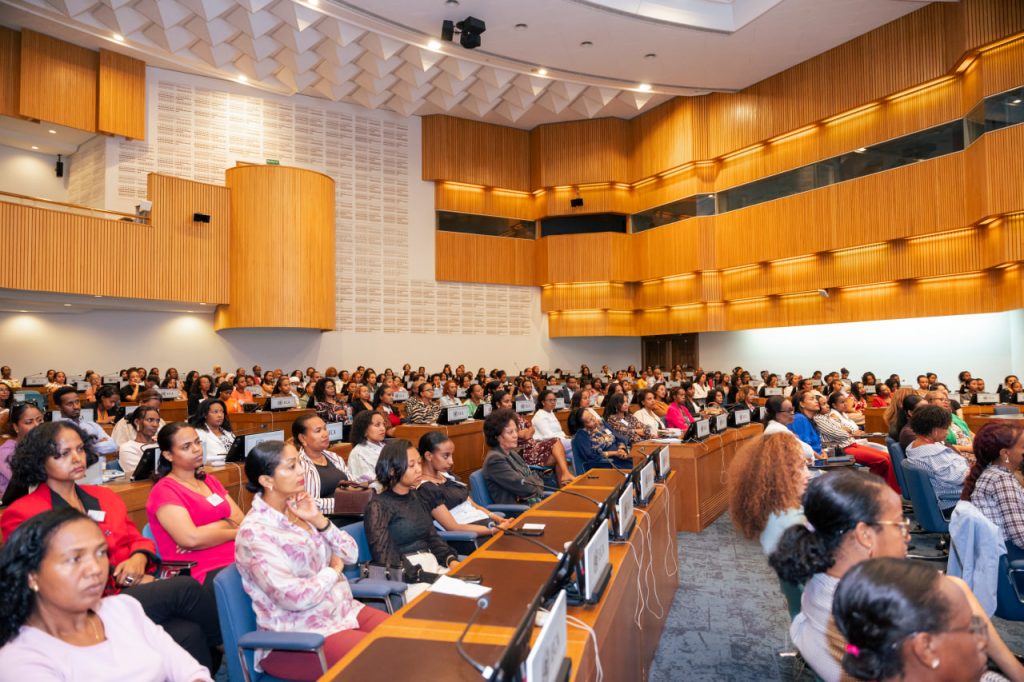
This year’s theme, “Integrity and Accountability: The Foundations of Transformation,” was not merely discussed, it was experienced. From the powerful panel discussions to the rich exchange of ideas, from the wisdom shared on stage to the authentic connections formed throughout the day, the Forum delivered what it envisioned and promised. With close to 500 participants in attendance, the atmosphere was energetic, thoughtful, and deeply inspiring.
Yet before revisiting the highlights of the day, it is only fitting that our first reflection and appreciation go to the people behind this remarkable endeavor, the dedicated minds, hearts, and hands whose commitment, sacrifice, excellence, and belief made the 12th AWiB May Forum a resounding success. Meaningful transformation never happens by accident; it is built intentionally by people who choose to serve with integrity, lead with accountability, and create spaces where dialogue can flourish.
The day began with a meaningful morning session focused on reflection, dialogue, and inspiration. From the very beginning, there was a strong sense of connection among participants, creating an atmosphere that was warm, engaging, and purpose driven. More than a gathering to celebrate achievements, the Forum became a platform to examine the values, choices, and leadership needed to build stronger institutions and communities across Africa.
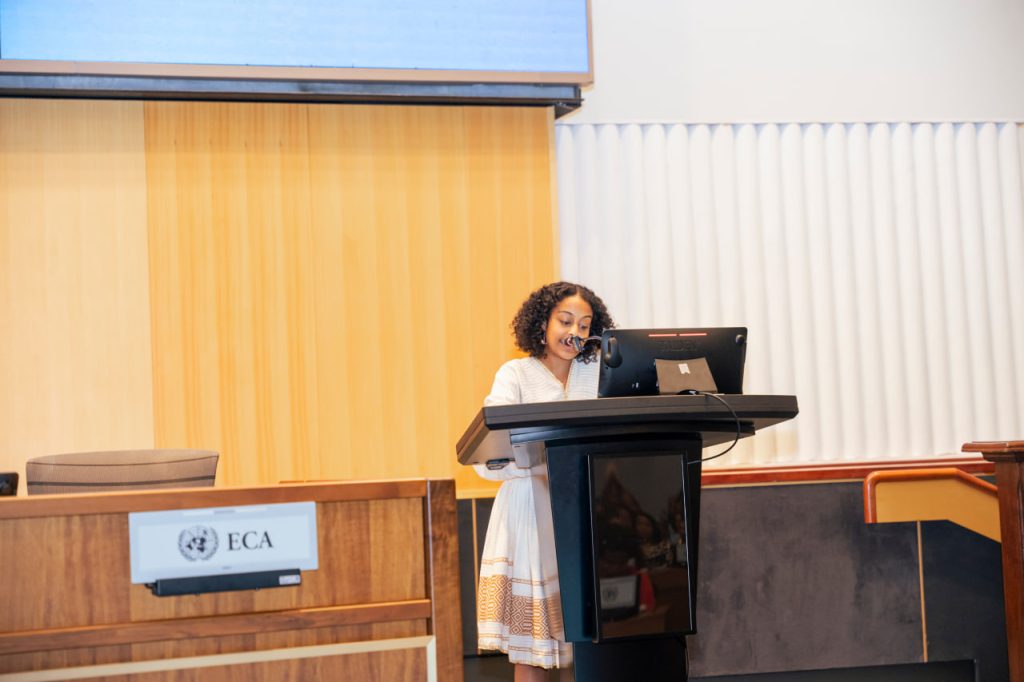
The program opened with a welcoming speech from Tsion Gebremedhen, President of AWiB 2026, who emphasized the importance of values driven leadership in today’s rapidly changing world. Her remarks reminded participants that transformation requires more than ambition. It requires integrity, responsibility, and the willingness to lead by example.
The morning also included an appreciation segment recognizing student sponsors and highlighting the important role young people play in shaping the future of leadership and transformation.
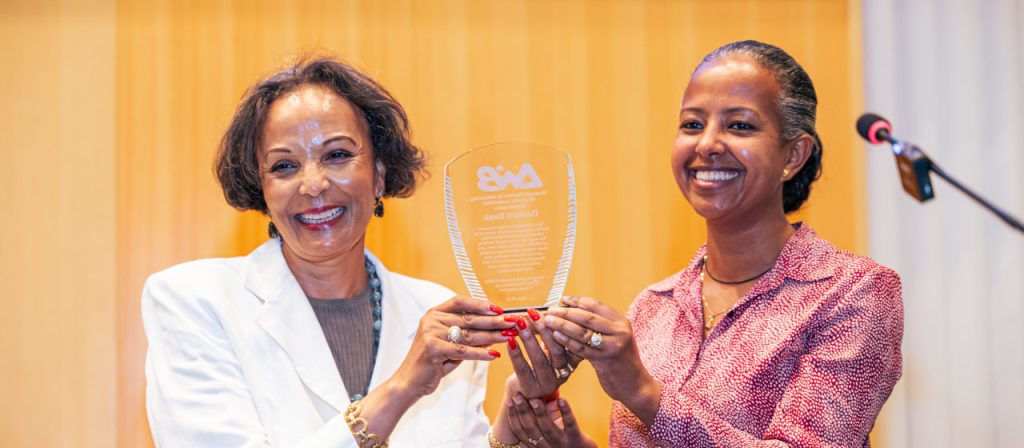
Another important highlight was the Dashen Bank Award presentation, recognizing the institution’s continued commitment to responsible leadership, inclusion, and organizational transformation. Dashen Bank was also recognized for its longstanding partnership with AWiB, supporting the organization since 2013 and serving as a sponsor of the Annual May Forum for three consecutive years.
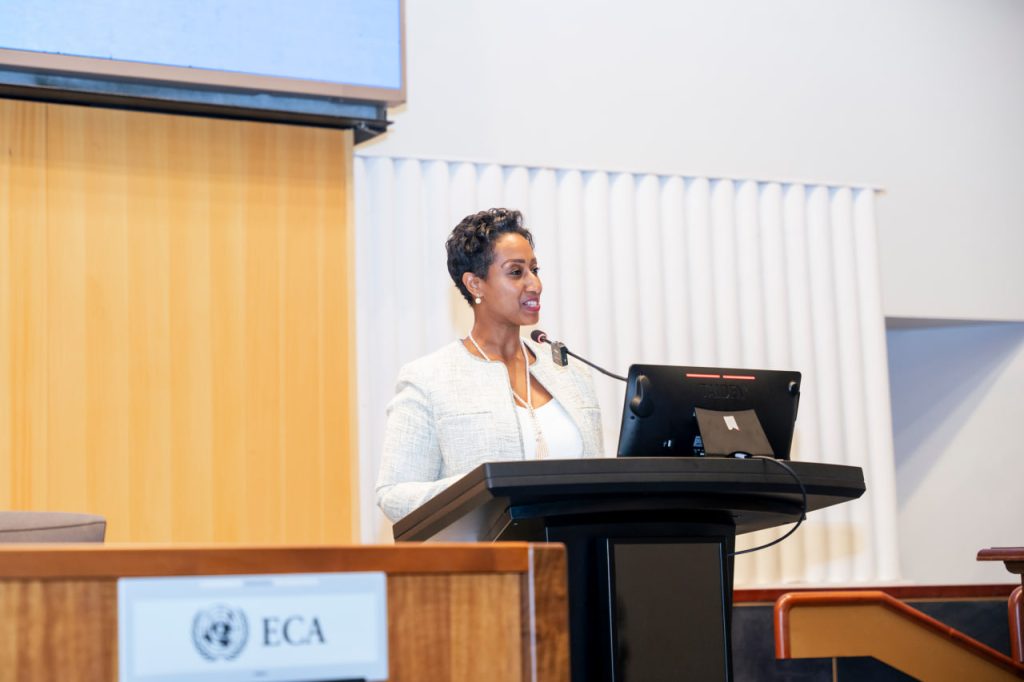
The award celebrated the bank’s efforts in promoting values-driven leadership, empowering women, supporting young professionals, and contributing to institutional excellence within Ethiopia’s financial sector. Following the presentation, Hewate Kefelegn, Chief People Officer of Dashen Bank, delivered an acceptance speech expressing appreciation for the recognition and reaffirming the bank’s commitment to building ethical, accountable, and people centered systems. In her remarks, she emphasized the importance of investing in people, creating inclusive workplace cultures, and leading with integrity to achieve sustainable growth and meaningful organizational impact.
The keynote speech was delivered by Dagmawit Moges, Director of the African Union Peace Fund Secretariat at the African Union Commission and former Minister of Transport of Ethiopia. Her address strongly reflected the central theme of the Forum. She emphasized that genuine and lasting transformation cannot be achieved through ambition, policies, visibility, or slogans alone. Rather, it must be built on integrity, accountability, and trust.
Drawing from her personal leadership journey, Dagmawit reflected on her experience as the first female Minister of Transport of Ethiopia and the challenges of navigating traditionally male dominated leadership spaces. She spoke honestly about pressure, self doubt, expectations, and the responsibility of representing many young women. Her message was clear and powerful: leadership is not simply about visibility or titles, but about service, courage, consistency, and integrity.
A central message of her keynote was that transformation begins with people and the everyday choices they make. She described integrity as the alignment between values and actions, doing what is right even when no one is watching. Accountability, she explained, is the willingness to take ownership of decisions and their consequences. She stressed that where integrity is absent, trust erodes, and where accountability is weak, systems fail.
The keynote also connected personal leadership with Africa’s broader challenges and opportunities. While acknowledging the continent’s innovation, resilience, young population, and immense potential, Dagmawit also highlighted ongoing issues such as conflict, inequality, unemployment, institutional fragility, displacement, and growing distrust in leadership. She explained that sustainable peace and prosperity depend on accountable institutions, fair governance, inclusion, dignity, and ethical leadership.
Speaking from her role at the African Union Peace Fund Secretariat, she noted that peace is not simply the absence of conflict, but the presence of justice, fairness, dignity, and trust. She also strongly emphasized the role of women in shaping Africa’s future, recognizing their resilience and contributions to sustaining families, businesses, institutions, communities, and peace processes, often despite significant barriers.
The atmosphere during the keynote was both empowering and thought provoking. Participants appeared deeply engaged, especially during the speaker’s personal reflections on leadership, ethics, responsibility, and women’s role in transformation. Her message carried a strong sense of urgency about the need for accountable systems while also inspiring hope, solidarity, and collective commitment.
Overall, the morning session successfully created a space for reflection, inspiration, and meaningful dialogue. Through the opening remarks, recognition segments, award presentation, and keynote speech, the Forum reminded participants that transformation begins internally through the values people choose to uphold, the actions they take, and the cultures they help create every day.
Parallel Session I – Power, Silence, and Complicity: What We Don’t Say Shapes Systems Recap
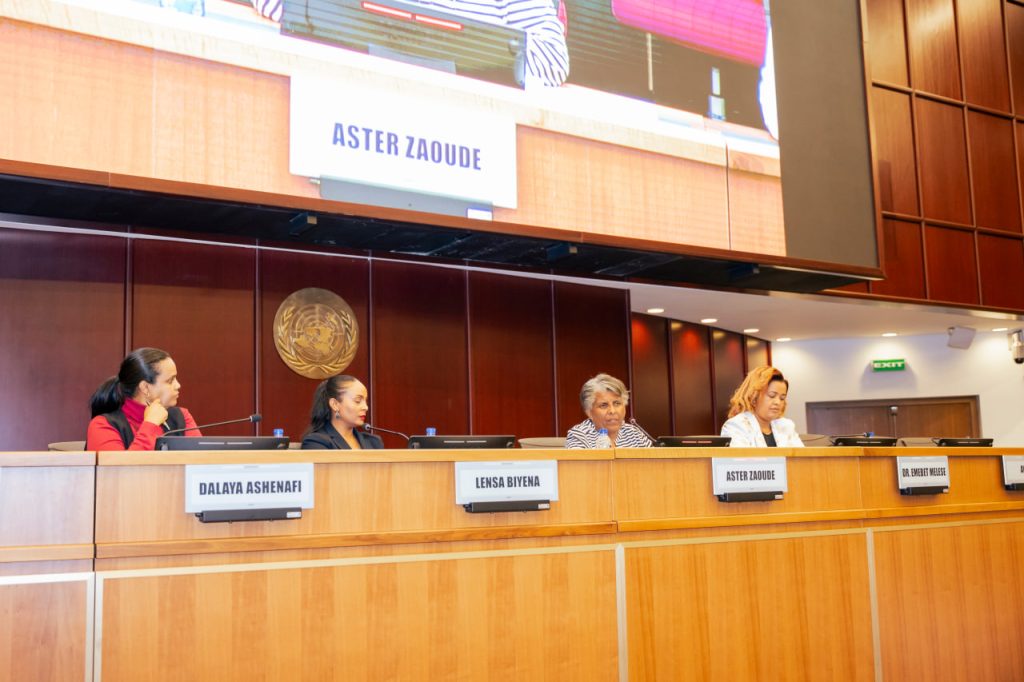
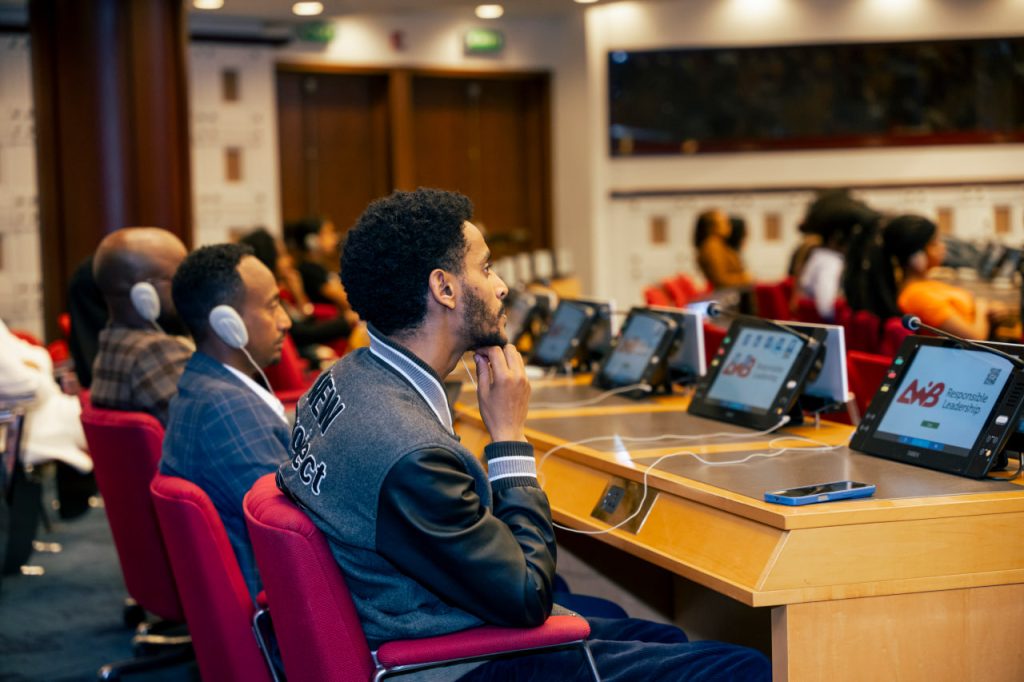

The room settles as the moderator Dalaya Ashenafi, Senior Researcher and program manager at Initiative Africa, takes the stage to open the morning panel, titled “Power, Silence, and Complicity: What We Don’t Say Shapes the Systems.” Rather than beginning with academic theory, she opens with a lighthearted story about her four-year-old son, whose fearless refusal to be silenced draws laughter from the audience. Yet the humor quickly gives way to a deeper reflection: silence, she explains, is rarely natural, it is carefully engineered by systems of hierarchy and power. People learn to “read the room,” censor themselves, and choose compliance over disruption because survival often depends on it. When resources, influence, and platforms are concentrated in the hands of a few, silence becomes embedded within the very structure of institutions.
But the morning is not meant to be a lecture on oppression; it is a conversation centered on the women who have learned to navigate and challenge these systems. With pride, the moderator introduces three remarkable women: Aster Zaoude, Dr. Emebet Melese, and Lensa Biyena.
As the introductions conclude, the moderator presents the central challenge of the panel through two powerful guiding questions for the speakers’ fifteen-minute reflections: Why does silence persist, even among capable and well-intentioned people? And what gives individuals the courage or the strategy to break their silence when it matters most? She leaves the audience with an even sharper provocation: when injustice unfolds, can neutrality ever truly be considered impartial? And where can ordinary people, especially women, find the space to reclaim their collective voice?
First was Aster Zaoude, a trailblazing international development leader whose distinguished 30-year career spans senior roles across the United Nations system. Since retiring in 2011, she has dedicated her life to building centers for women’s leadership across Africa and founding a scholarship program that has empowered hundreds of visually impaired female students at Addis Ababa University.
Aster started her speech with an appreciation for AWiB’s work in bringing women to the forefront of leadership and creating a networking platform for collective growth. She questions what it means to be in power, and what it means to stay silent and comply. Everyone’s journey is different, but every woman faces a lot of challenges in their personal and professional lives. In her upbringing, she was surrounded by women who inspired her, so it was something natural to her.
Aster recalls a time she was reading an article in Menen, a prominent magazine at the time, where a woman was protesting against women wearing lipstick and short dresses. Aster submitted a three-page piece to the magazine, arguing for the right of choice for women. Women are affected disproportionally by war, conflict, and societal breakdown. Solidarity is important, even if you are not impacted. The victims of Jeffrey Epstein are examples of how damaging a lack of compassion can be; some of them even committed suicide afterward, and their stories show why we need change.
In Ethiopia in 2014, a group of men raped a 16-year-old girl for 15 days. Her abductors abandoned her on the side of a road. After she managed to contact her family, she was hospitalized with severe physical trauma, including advanced gynecological injuries. Tragically, Hana succumbed to her injuries and passed away. Before she passed away, she made her dad promise that he would fight for her rights until the end. However, the campaign stopped; the police halted the campaign, saying it was interfering with their investigation. If the punishment for this crime fit the act, there would be less crime.
She closes the session with a famous quote from Martin Luther King Jr.:
“In the end, we will remember not the words of our enemies, but the silence of our friends.”
Next was Dr. Emebet Melese, a towering figure in Ethiopia’s financial sector. Rising from a junior officer to senior executive roles at the Commercial Bank of Ethiopia, she later became the President of the Development Bank of Ethiopia and recently stepped in as CEO of Nib Bank to restore institutional trust during a critical period. She balances her demanding corporate leadership with being a mother of three and holding a PhD focused on banking innovation.
She began her address by reflecting on how her fifteen years of service had profoundly shaped her worldview, anchoring her perspective in a deeply rooted cultural truth: “ሀገርን የሚያሳፍር ነገር አታርጊ” meaning don’t do anything that brings shame upon your people.
Growing up, this principle was her moral compass. This instilled in her a lifelong responsibility to honor her community and heritage. This awareness remained at the forefront of her mind throughout her career, shaping her character and heavily dictating how she chose to impact the world around her.
This foundational sense of duty didn’t breed compliance; instead, she grew up constantly challenging the conformity expected of her in the workplace, driven by a steadfast vision to serve a wide range of society. This commitment was evident from her very first role as a window clerk for the Commercial Bank of Ethiopia. Years later, when she rose to a position of power, she used her influence to fundamentally transform how customers were treated, turning her early vision into institutional reality.
To her, leadership is inseparable from integrity, which she believes must always be held close to the heart. She cautioned the audience that staying silent and complying with flawed systems creates dangerous pitfalls, leaving decisions vulnerable to selfish desires or external pressures that compromise core principles.
In the end, it is personal accountability that saves a leader. As she beautifully noted, “The only candle that never goes out is the one in your heart, guiding your every move.” Yet, even with that inner light, she acknowledged the heavy systemic challenges women continue to face, reminding the room that there is still a great deal of work to do.
Ethiopian Mediation and Arbitration Center Executive Director, Lensa Biyena, opened her speech by expressing gratitude to AWiB for creating opportunities that empower women and for giving her the platform to share her story and perspective. Her appreciation set the tone for a deeply personal and inspiring reflection on leadership, courage, and the importance of speaking up.
She then took the audience back to her childhood, sharing how both of her parents shaped the person she became. She described her mother as a woman who challenged traditional expectations and became a strong example of courage and independence. At the same time, she credited her father for being supportive and for giving her the freedom and confidence to grow and express herself openly as the youngest child in the family.
Reflecting on her younger years, Lensa explained that she was always known for asking questions, whether at school, in church, or in other spaces of authority. She constantly challenged injustice and sought answers whenever something felt unfair. More importantly, she emphasized that her questioning was never directed only at others; she also learned to question herself by asking, “What is my role? What contribution can I make?”
She went on to discuss why many people choose silence. According to her, fear is one of the greatest reasons, while another is the belief that an individual voice does not matter unless it is supported by the majority. However, she challenged this mindset by reminding the audience that history is often shaped not by crowds, but by a few brave individuals willing to take bold and strategic action.
Lensa also spoke honestly about the personal difficulties she experienced while stepping into leadership at a young age. Despite moments of doubt and challenge, she remained determined to break her silence, use her voice, and continue speaking up for what she believed in.
The audience asked how young women can intentionally speak out without facing isolation or being labeled as hostile by an unfair system that traditionally encourages women to remain silent. They questioned what the core challenges of becoming a woman leader are, what can be gained from it, and how to navigate distinct generational problems since gender inequality is still far from being solved. Furthermore, they asked how a leader is fundamentally built, what principles should guide them, how to strategically time one’s voice to ensure it brings real change, and how women can gain access to the informal network where major decisions are notoriously made “outside of the boardroom.”
Aster emphasized that when pushing walls to bring women to the forefront of leadership, resistance should be expected, especially in a world governed by societal traditions, restrictive laws, and deep-seated religious practices that have historically held women back. While she noted that she cannot give an exact, single formula for where to start your individual leadership journey, she strongly advised joining organized communities like AWiB. For Aster, being part of these supportive networks is what shapes you, builds collective strength, and empowers everyone to push through structural barriers for the sake of their goals.
Dr. Emebet focused on the structural environment, arguing that it must be actively reshaped by leaders to ensure ethical leadership standards are shared and upheld. She challenged traditional notions of control, stating that what we typically assume is absolute power can actually be broken by strategic silence and targeted talent. By leveraging power to challenge the status quo, women can shift their environments. She warned that complicity doesn’t just mean actively engaging in an unethical system, but also letting it thrive through inaction; therefore, when breaking that silence, choosing the right strategic timing is critical to ensure your voice delivers actual, lasting change.
Lensa reframed leadership as an existential choice of “to be or not to be,” stating that true growth comes from developing yourself, knowing exactly what you stand for, and allowing yourself to be influenced and moved by what is happening around you. She urged women to feel a personal responsibility to step up, approaching their journey with absolute authenticity and discipline. Lensa beautifully concluded that leadership is not a glittering, jeweled crown that you just wear around on your head for status or vanity; rather, it is about being entirely intentional with your actions to naturally command respect and drive impact.
In her conclusion, Dalaya called for the creation of a society where people are encouraged to ask questions, challenge injustice, and speak openly without fear. She left the audience with a powerful reminder that courage is contagious in the same way silence can be contagious, which is why she intentionally surrounds herself with people and environments that inspire boldness, confidence, and positive change.
Parallel Session II – Courageous Conversations: Holding Oneself and Others Accountable Without Damage
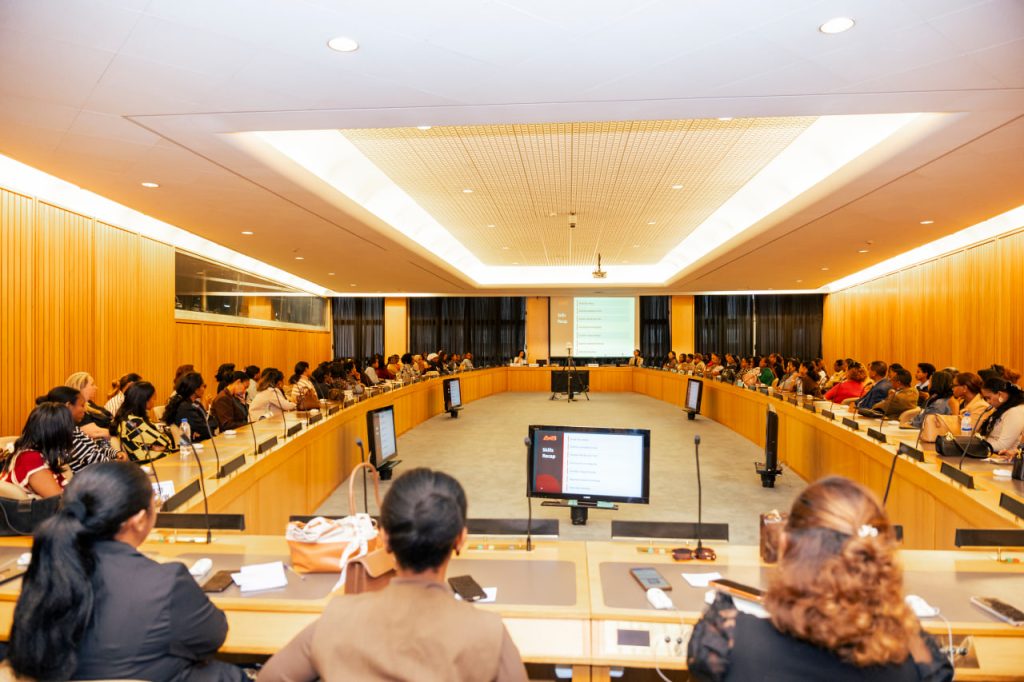
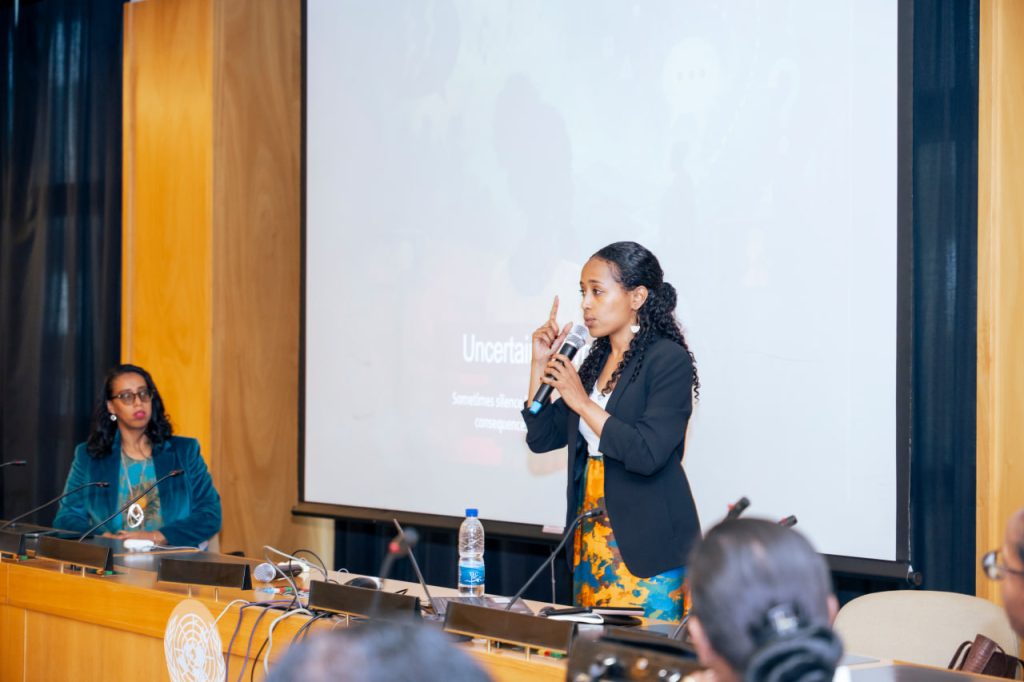
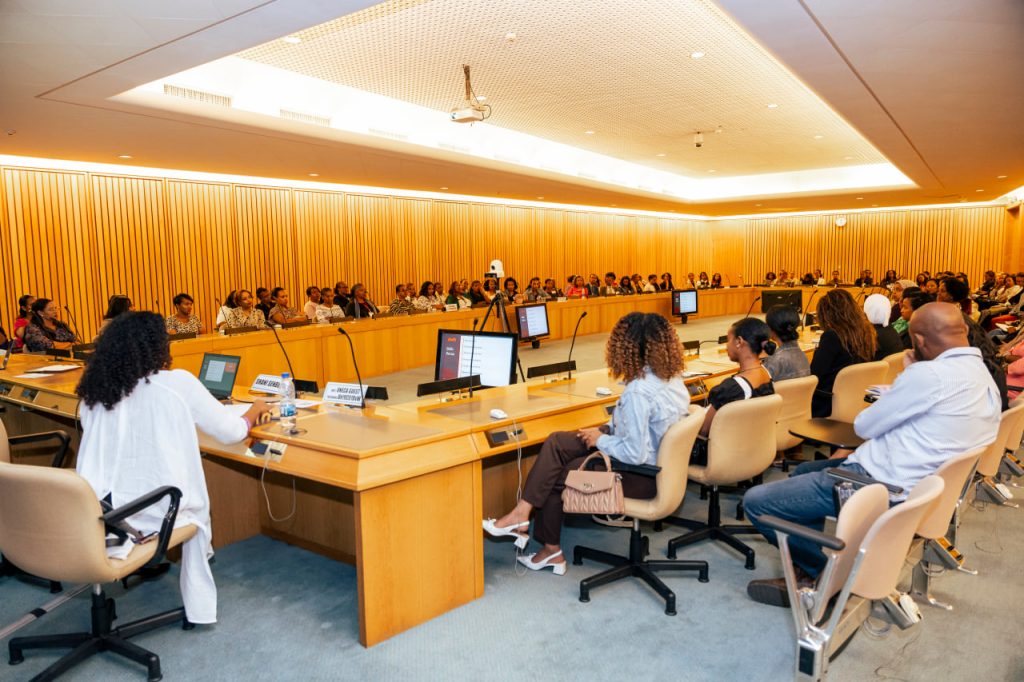
The parallel session of the Forum, Courageous Conversations: Holding Oneself and Others Accountable Without Damage, created an engaging space for reflection, dialogue, and shared learning around communication, accountability, and leadership.
The moderator Helina Abye, Communications Lead at AWiB, welcomed participants by highlighting why courageous conversations are increasingly relevant in today’s workplaces, communities, and leadership spaces. She noted that many people struggle to address tension, provide honest feedback, or raise concerns without damaging relationships.
She then introduced the speaker Ethiopis Tadesse, a Communications and Advocacy Specialist with over a decade of experience in development communications and community engagement. Ethiopis is a Mandela Washington Fellow, Regional YALI Fellow, Rotarian, and Ethiopia’s first female Distinguished Toastmaster (DTM). She is passionate about leadership, communication excellence, youth empowerment, and community impact.
Throughout the session, Ethiopis encouraged participants to actively engage with one another. At each section of the presentation, attendees were invited to discuss reflections and experiences in small groups, creating a highly participatory environment.
The session explored how culture shapes communication and accountability. Participants reflected on how silence, disagreement, and feedback are often influenced by social expectations and cultural norms. Drawing from Hofstede’s Cultural Dimensions, the discussion examined themes such as power distance, collectivism, uncertainty avoidance, and emotional restraint.
Audience members shared reflections on how children are traditionally not encouraged to freely express their opinions in many environments. Participants also discussed how elders and religious leaders often hold stronger authority and influence within society, shaping who feels culturally allowed to speak, disagree, or challenge ideas openly. These reflections connected closely with the discussion on hierarchy, silence, and accountability.
Participants also explored the hidden cost of silence in organizations and relationships. The presentation highlighted how avoiding discomfort can lead to resentment, weakened trust, delayed accountability, and normalized dysfunction.
Another key focus of the session was accountability without damage. Ethiopis shared practical approaches to difficult conversations, including starting with intention, describing behavior objectively, explaining impact clearly, and inviting dialogue.
The session also reflected on respectful disagreement within Ethiopian cultural contexts. Participants discussed the importance of timing, tone, dignity, composure, and one to one feedback when navigating sensitive conversations.
Ethiopis concluded the discussion by encouraging participants to rethink what courage looks like in society today. She touched upon the benefits of speaking honestly and directly without humiliating others. She also noted the importance of balancing social harmony with accountability and choosing discomfort over passive silence.
The session created a thoughtful atmosphere where participants could openly reflect on communication patterns, leadership, and the role courageous conversations play in building healthier relationships, teams, and institutions. Participants left feeling more capable in addressing and navigating conversations that require courage and wisdom.
Parallel Session III – Ethical Resilience: Sustaining Integrity in High-Pressure, High-Fatigue Environments
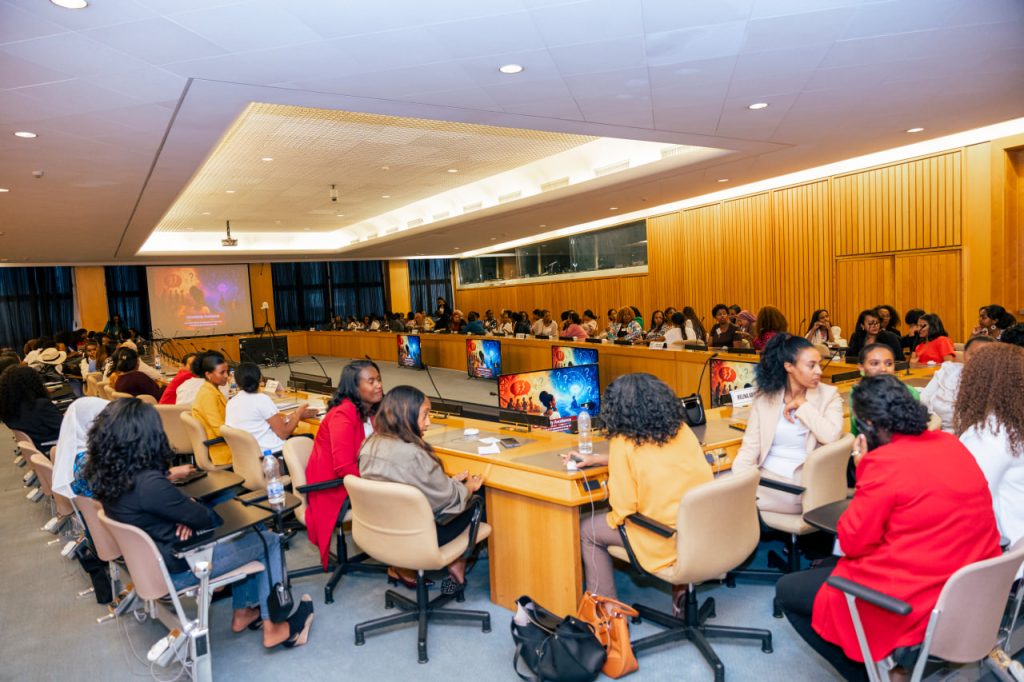
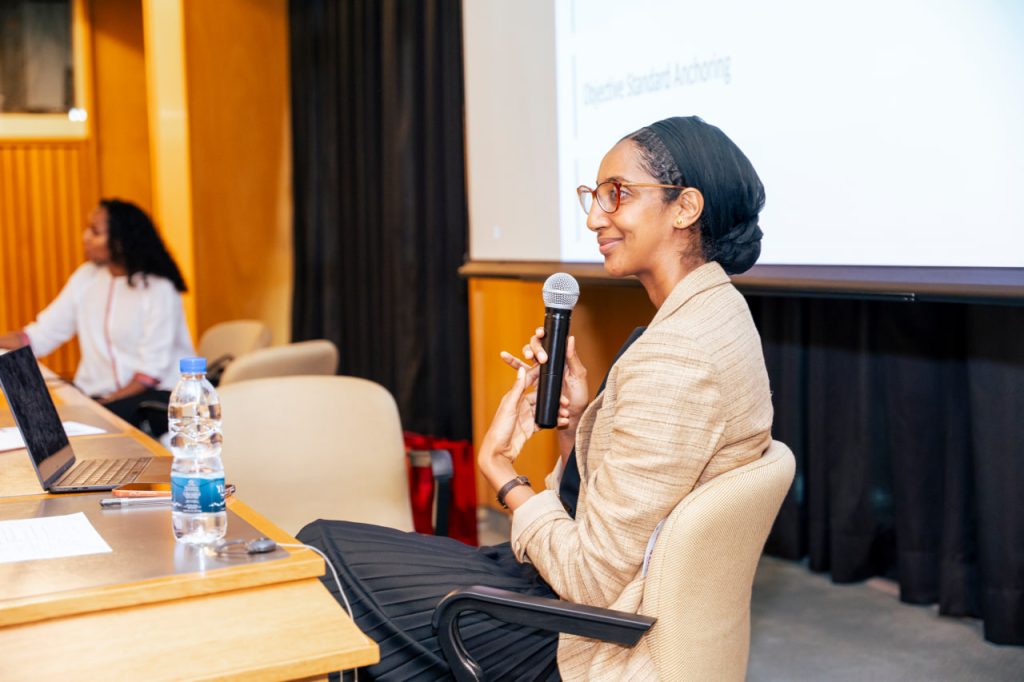
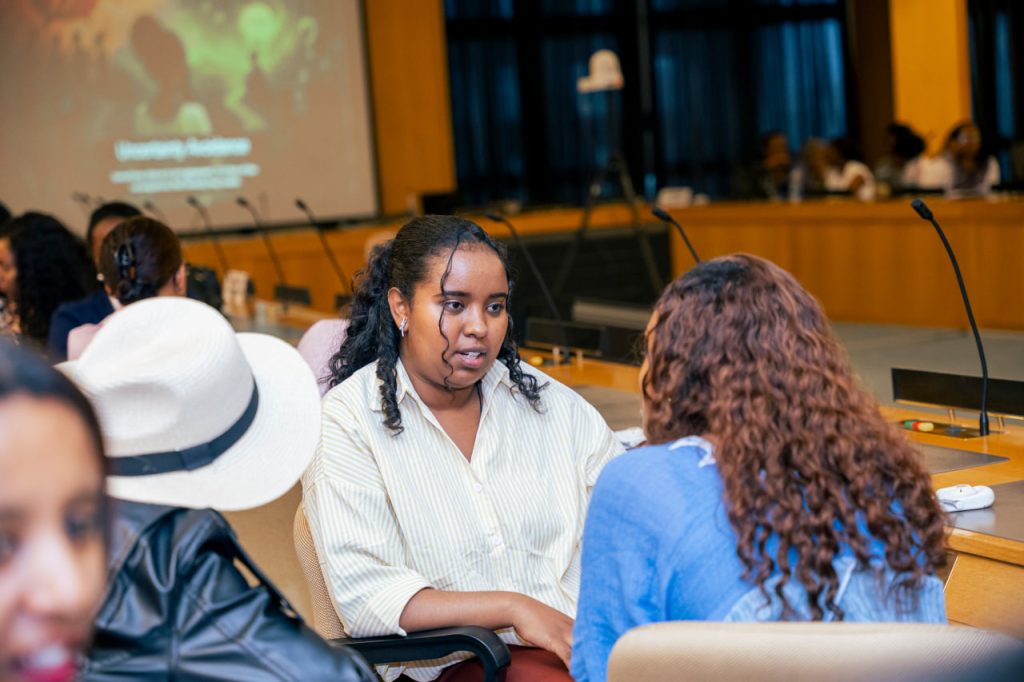
The parallel session on Ethical Resilience: Sustaining Integrity in High-Pressure, High-Fatigue Environments created a reflective and engaging space for participants to explore ethical dilemmas in professional, personal, and social environments. Shani Senbetta, Chief Operations Officer at Zeleman Communications and founder of Kidame Mart, facilitated the discussion while Hinjat Shamil, Senior Strategy Advisor at Ethiopian Investment Holdings, moderated the session. Together, they encouraged participants to move beyond theory and openly examine the pressures that challenge integrity in everyday life.
The session opened with an interactive poll that explored participants’ familiarity with ethical resilience and integrity. While many participants described themselves as somewhat familiar with the concepts, several acknowledged limited understanding. Most participants identified professional environments as the main source of ethical pressure, while others pointed to family and social circles. When participants reflected on their preparedness to maintain integrity under pressure, most said they felt only somewhat equipped.
Hinjat explained that AWiB selected ethical resilience as this year’s forum topic because individuals shape the systems and communities they want to build through their daily choices. She introduced the distinction between “to be” and “to perform,” explaining that ethical resilience enables individuals to act authentically rather than constantly responding to external expectations. She established ground rules emphasizing confidentiality, respectful disagreement, and nonjudgmental reflection to encourage open dialogue.
The discussion focused on three core pillars: awareness, self-reflection, and preparedness. Participants explored how environments and pressures influence decisions, reflected on their personal values and boundaries, and discussed practical tools that help them navigate difficult situations before they arise.
Shani guided participants through a deeper exploration of integrity, defining it as the consistent alignment of actions with one’s values and moral principles, even in uncomfortable situations. She emphasized that discomfort and pressure, rather than lack of awareness, often challenge integrity the most. She explained how repeated compromises lead individuals to experience self-doubt, emotional exhaustion, anxiety, cynicism, and resentment, while gradually normalizing behaviors they once rejected.
Another interactive poll examined why people compromise their values. Participants identified fear, social pressure, survival realities, exhaustion, and cultural expectations as key influences. Many participants spoke about fear of losing opportunities, financial security, or relationships, while others highlighted pressures linked to hierarchy, loyalty, and family expectations.
The session then shifted toward practical strategies for navigating ethical dilemmas. Participants identified their personal values and non-negotiables and clarified what they would refuse to compromise, even under pressure. Shani encouraged participants to build accountability circles—trusted individuals who can offer honest feedback and guidance during difficult moments.
Shani introduced several communication tools that help participants navigate workplace pressure without escalating conflict. Participants practiced pausing before responding to uncomfortable requests and used phrases such as “Let me think about that” or “I need time to review this carefully” to create space for reflection. They also practiced asking objective questions about company policies, organizational values, and long-term consequences instead of directly confronting others.
Shani presented the “ally and impact” approach, which reframes ethical disagreement as a commitment to protect the team, organization, or relationship rather than oppose others. Through examples involving hiring processes, procurement shortcuts, and workplace mistakes, participants explored how they can communicate ethical boundaries while still preserving collaboration and respect. She also introduced “objective standard anchoring,” where individuals rely on policies, laws, or formal procedures instead of personal opinion when they resist unethical pressure.
Two case studies allowed participants to apply these frameworks to workplace scenarios involving favoritism, discrimination, and silence in the face of unethical behavior. Participants reflected on their fear of confronting influential individuals and examined how silence damages workplace culture and weakens employee confidence over time.
Participants reflected on the tensions between personal values, cultural expectations, and survival realities as they shared experiences from their workplaces, families, and communities. Many discussed moments where loyalty, hierarchy, fear, and professional pressure influenced ethical decisions and challenged their ability to remain aligned with their values. Participants raised questions about whether values change over time or through difficult situations, leading to reflections on how growth, learning, and life experiences can reshape perspectives, while ethical principles should remain grounded despite external pressure. One participant questioned whether individuals shape systems or whether systems gradually shape individual behavior, sparking broader conversations about accountability, organizational culture, and societal norms. Others reflected on the long-term consequences of silence in professional spaces and examined how repeated compromises slowly normalize unethical behavior within organizations and communities. The exchange encouraged participants to critically examine the environments around them and reflect on the everyday choices that shape both personal integrity and collective culture.
Hinjat highlighted the importance of emotional awareness and explained that many people struggle to recognize or articulate their emotions. She encouraged participants to build emotional clarity so they can better understand how ethical pressure affects their thinking and decision-making under stress.
The discussion concluded with participants recognizing that ethical resilience develops through repeated everyday choices rather than a single defining moment. In her closing remarks, Shani reminded participants that while changing systems may feel overwhelming, maintaining alignment with one’s values remains deeply important. She emphasized that ethical resilience begins with awareness, preparation, emotional awareness, and the consistent choice to remember who we are, even under pressure.
Women in Lead: Choices That Shaped a Life of Leadership
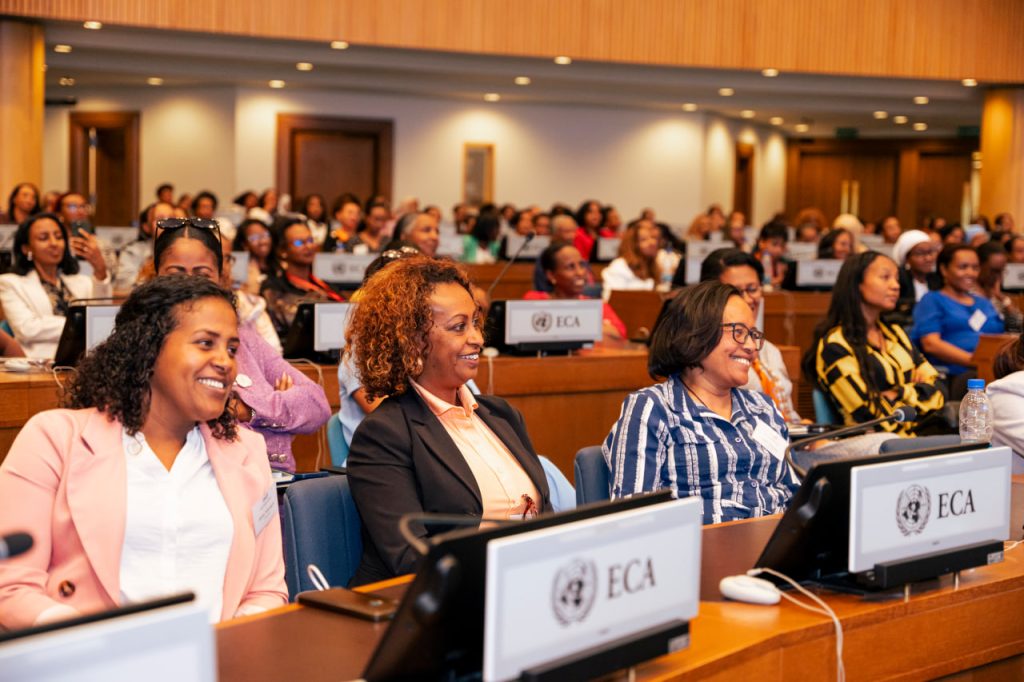
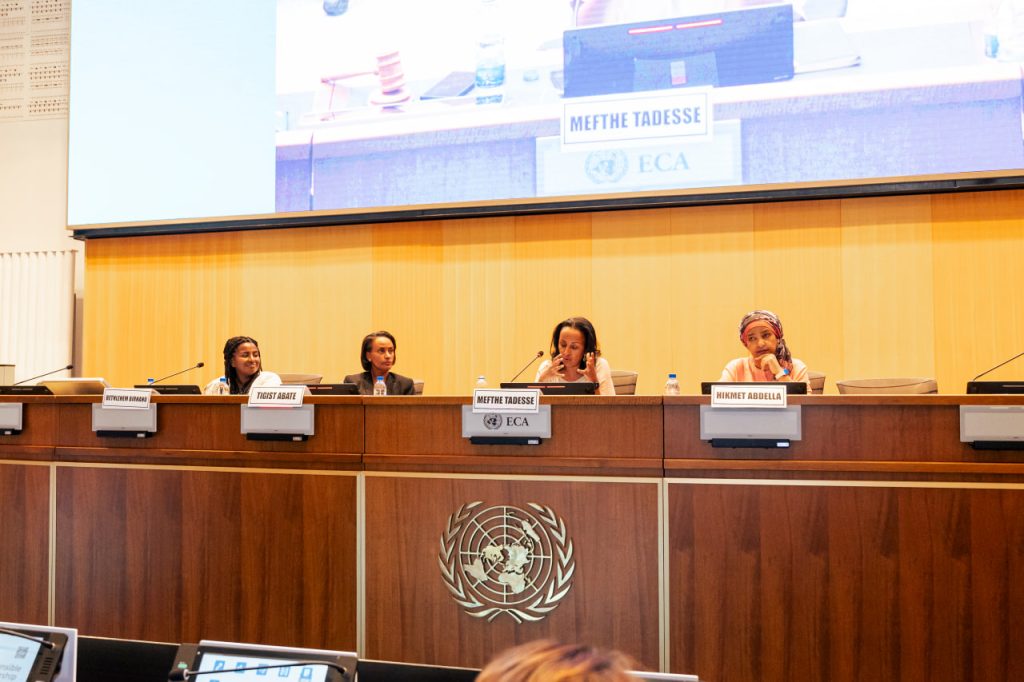
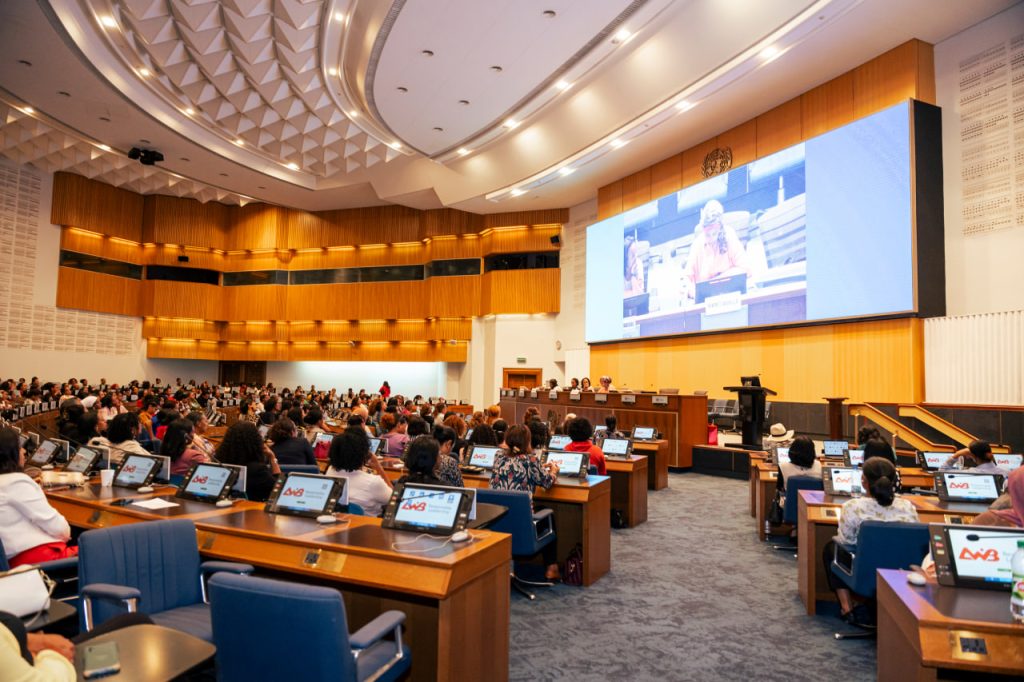
Dr. Bethlehem Birhanu, AWiB’s 2026 President Elect, opened the afternoon Women in Lead session themed “Choices That Shaped a Life of Leadership.” She introduced the session as a reflection on leadership beyond titles and positions, focusing on intentional choices, values, challenges, and practices that shape a woman’s leadership journey over time. She invited the panelists to reflect on defining moments in their journeys, how they navigate pressure while staying grounded in values, the habits that sustain integrity and resilience, and how they create space for others to grow into leadership. She then introduced the panelists: Tigist Abate, Chief Finance Officer at Enat Bank S.C., Mefthe Tadesse, Country Director of Mastercard Foundation, and Hikmet Abdella, CEO of FSD Ethiopia.
Tigist opened the conversation by defining leadership through daily practice and inner clarity. She traced her leadership journey to a training at the Commercial Bank of Ethiopia, where a trainer said, “Leadership is gold.” That moment changed how she understood leadership and her role in it.
She described leadership as something that develops through consistent daily action rather than position. She saw herself as “a dot in this world with a big responsibility,” explaining that leadership shows in how a person responds to everyday responsibilities. For her, leadership begins when a person notices gaps and chooses to act.
Tigist linked leadership to learning and discipline. She shared her habit of reading leadership books and credited John Maxwell’s work for shaping her thinking. She explained that leadership goes beyond personal growth and requires creating environments where others thrive through commitment, collaboration, and bringing people together. She connected this to the law of magnetism, noting that leaders attract people who reflect who they are. She highlighted qualities such as stillness, laughter, love, and serenity, which shape leadership presence. She emphasized that leadership depends on timing and maturity, not only action. Above all, she returned to integrity and accountability as the foundation of leadership. Leaders must build and extend trust. She concluded that leadership is about building people and systems that continue beyond the individual.
Mefthe extended the conversation by describing leadership as shaped through lived experience rather than formal definition. She shared that she had not reflected deeply on her leadership journey until this forum. Looking back, she recognized that her leadership began early as the eldest daughter, where she carried responsibility for her younger sister. She also credited her mother and grandmother for shaping her belief in independence and self-reliance.
Her leadership became more intentional when she moved to England for her studies, where she spent 15 years navigating education, independence, and cultural change. This period strengthened her self-leadership and sense of ownership over her path.
She emphasized that leadership depends on people and cohesion. After returning from England, she joined TechnoServe, where she served for 15 years. She entered without technical knowledge of the coffee sector but focused on leadership and teamwork. While learning the technical side, she contributed in coordination and people management, showing that leadership transfers across sectors when rooted in trust.
She also reflected on a difficult moment when a manager risked losing his position due to concerns over severance payments. She stepped forward and took accountability, then worked on an alternative solution that allowed the employee to keep his job while addressing organizational concerns. She explained that leadership requires ownership in complex situations.
Mefthe emphasized that sustainable leadership requires balance, highlighting self-care, mental well-being, and connection. She stressed that ethics and accountability remain constant regardless of position and concluded that leadership is sustained through humility, self-awareness, and consistency over time.
Hikmet added another layer to the conversation by centering leadership on perspective. She began with a story about a woman who judged her neighbor’s laundry as dirty, only to realize the issue came from the window she was looking through. She used this to show that people interpret reality through personal lenses rather than objectively.
She noted that perspective shapes how people trust and understand others, as individuals interpret behavior through their own experiences. In her own experience, she shared that she tends to trust people deeply and has learned to accept human complexity, choosing understanding over quick judgment.
Hikmet shifted the discussion to mindset, contrasting “Why me?” with “Why not me?” She explained that challenges are part of life. “Why me?” keeps people stuck in frustration, while “Why not me?” pushes them toward solutions and action. Leadership is about moving forward with responsibility and clarity.
She connected this to her lived experience as the eldest daughter, where she carried responsibility from an early age. She often experienced fear, even in simple situations like going to a shop alone. Over time, she understood that leadership cannot function with fear.
Her self-leadership deepened when she moved to England, where she experienced culture shock and independence. She faced peer pressure but chose to stay true to her values, showing that leadership often requires personal solutions in uncomfortable situations.
She recalled a moment during her graduating year when she was asked to step back from a school position so another person could proceed. That strengthened her self-advocacy and ownership of her choices.
She later returned to Ethiopia expecting to join her family business, but her father encouraged her to build her own path, strengthening her independence. She then worked for nine years at the Irish Embassy, remaining committed to her values even when opportunities could have compromised her integrity. While others misread her consistency as naivety, she chose ethics over convenience.
She later joined ACCA after competing with more than 70 applicants, reinforcing her belief in preparation and networks. Her career also included national policy work and four years in government service, where she strengthened public systems.
During the Q&A, participants asked whether women can “have it all.” The speakers reframed this, emphasizing that leadership is not about perfection but intentional choices and shifting priorities across life stages.
A participant asked about the biggest challenges they face in leadership. Mefthe shared that one of her main challenges was being expected to behave in a certain way as a young woman in a senior role, including how she should speak, dress, and carry herself. She chose instead to remain authentic while staying focused on her work and the bigger vision. Hikmet reflected that maintaining integrity comes with challenges, including resistance and misunderstanding, but she chose to remain firm in her values even when it created pressure.
Another question explored habits that sustain leadership. The speakers emphasized consistent practice rooted in integrity, accountability, and resilience.
A participant asked why women are not stepping into leadership roles even when opportunities exist. The speakers identified fear and external pressures as key factors and emphasized mentorship, trust, and support as central to leadership.
The final question to Tigist explored how leadership can coexist with calmness and stillness. She emphasized emotional balance and inner grounding, even in high-pressure environments.
By the end of the session, a clear thread connected all reflections. Leadership does not come from position. It emerges from perspective, discipline, and daily choices that reflect values in action.
Dr. Bethlehem Birhanu closed the session by reaffirming AWiB’s commitment to creating spaces where women engage deeply with lived leadership experience. She emphasized that leadership grows through accumulated choices that shape character, capacity, and lasting impact.
Share with your Circle!