

Seen or Forgotten
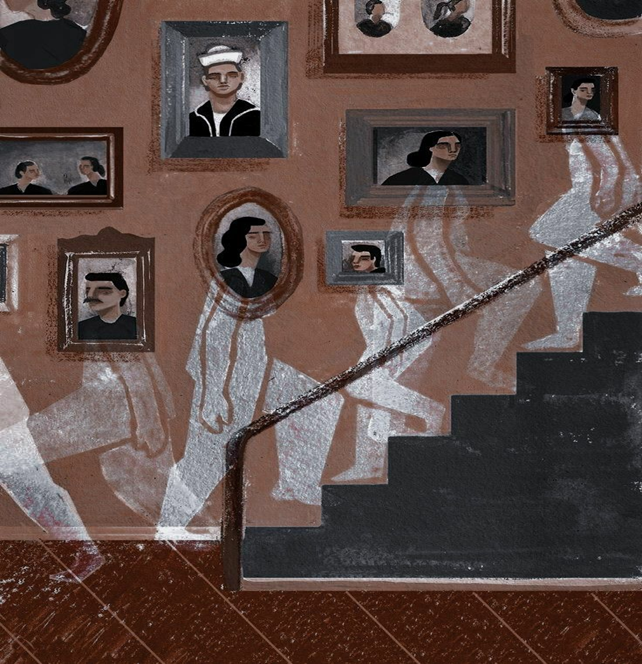
An illustration by Hannah Perry
To give attention is to grant existence, as if we have to be witnessed to matter, to have a concrete identity. One could reasonably concede that attention is power. But who gets attention? The rich? The loud? The beautiful? The privileged? It leads me to consider the other side.
Every aspect of life revolves around giving or receiving witness. In the sociopolitical realm, attention is strategic and transactional, and love is no different. Earthly love, whether in family, friendship, or romance, is rarely unconditional. Its condition is this: how willing someone is to understand us and validate us.
When we were kids, we used to perform for the adults to receive some kind of recognition and special treatment. As adults, we are still trying to do that, only now it is subtler and better disguised by the ego. So we do all types of things to siphon acknowledgment in every direction.
This transaction can influence the way we see and treat ourselves- or perhaps it works the other way round. To be loved is to be seen, yet what are we destined to do to be seen finally? It rarely comes naturally, which makes performance part of the deal. As Michael Bassey Johnson said, ‘don’t pretend to be what you’re not. Instead, pretend to what you want to be; it is not pretence, it is a journey to self-realization.’
When someone hasn’t felt appreciated or thinks they don’t matter, there are psychological consequences that follow. Namely, Emotional abandonment, silent invalidation, chronic dismissal, and the bigger outcomes that follow. traumatic responses like hyper independence, people pleasing, overachievement as a way of masking the echoless void, and the emotional hunger that lives inside us.
Every choice we make, every decision we take, is often seduced by the life we imagine for ourselves- a life we probably saw modeled by those around us. That becomes our focus. We begin again and again, trying not to be just a blip in the cosmic making of the universe. Although oblivion is inevitable, we all secretly think we are the exception, right? [ or is it just a few of us burdened by our semi-true mediocrity?]
Surely, there are a select few from the anti-mediocre crew who decide to put themselves there through digital portals. It does not really matter whether one has an educational agenda or funny content; the principle is the same: fame and entertainment. ads fight for it, influencers monetize it, and algorithms manipulate it.
A perfect example of this dynamic appears in the movie Nerve. The film turns attention into a literal game where players perform increasingly dangerous dares for an invisible online audience. In Nerve, visibility becomes currency: the more people watch you, the more powerful you become. But the audience, hidden behind screens, holds the real control. They decide the dares, reward the risk, and disappear when things go wrong. The crowd becomes the judge, jury of the chaos. The film exaggerates reality only slightly, because the same structure already exists online: people perform, strangers watch, and the algorithm decides who deserves to be seen.
Attention shapes our self-worth and penetrates our scale of validation from others. But maybe, attentional generosity is not only about how we treat others and vice versa, but how we repair something inside ourselves. The child who once performed for approval might eventually learn to offer attention freely, not as a transaction, but as recognition and care.
Written by: Ruth Mekasha
Share to your circles!
Deeply moving.
Thank you, Ruth.