Did Curiosity Kill the Cat?
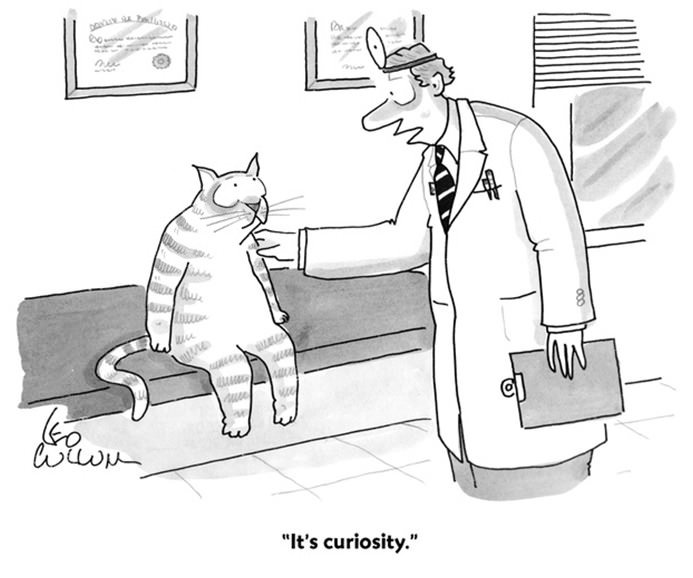
You probably are familiar with the common proverb, “Curiosity killed the cat,” but what was the origin of that proverb, and did it really intend to suppress curiosity?
Interestingly, the original version was “Care killed the cat,” with the word “care” referring to grief or worry. So what happened? How did “care” get replaced by “curiosity?”
This would not have been the first time for curiosity to be discouraged. All civilizations built, at some point, walls around certain types of knowledge. French abbot St. Bernard Clairvaux even pronounced in the 12th century that curiosity is close to being a deadly sin: “To learn in order to know is scandalous curiosity.”
Galileo Galilei encountered the discouragement of curiosity in his findings that the Earth and all the other planets revolved around the Sun,he was thrown in jail.
Unfortunately, attempts to suppress curiosity did not end centuries ago. What is the lesson from all of these stories of oppression, intimidation, and assaults on curiosity? Dr. Mario Livio coined the phrase: Curiosity is the best remedy for fear. It means that we are afraid of the unknown; of those things we know very little about. Becoming curious about them and making an effort to learn more usually acts to relieve that fear.
The ability to be curious about almost anything you like is, after all, a clear manifestation of freedom.
Since curiosity in humans is not only inevitable but is also a principal driver of the desire for the acquisition of knowledge, we should all be happy that the idiom “Curiosity killed the cat” has a positive rejoinder: “But satisfaction brought it back!”
Use your voice. Use your questions. Stay kind, and stay curious cats…
Source: https://www.psychologytoday.com/us/blog/why/202009/did-curiosity-really-kill-the-cat
Share to your circles!