The Effect of Trauma on Relationships Recap
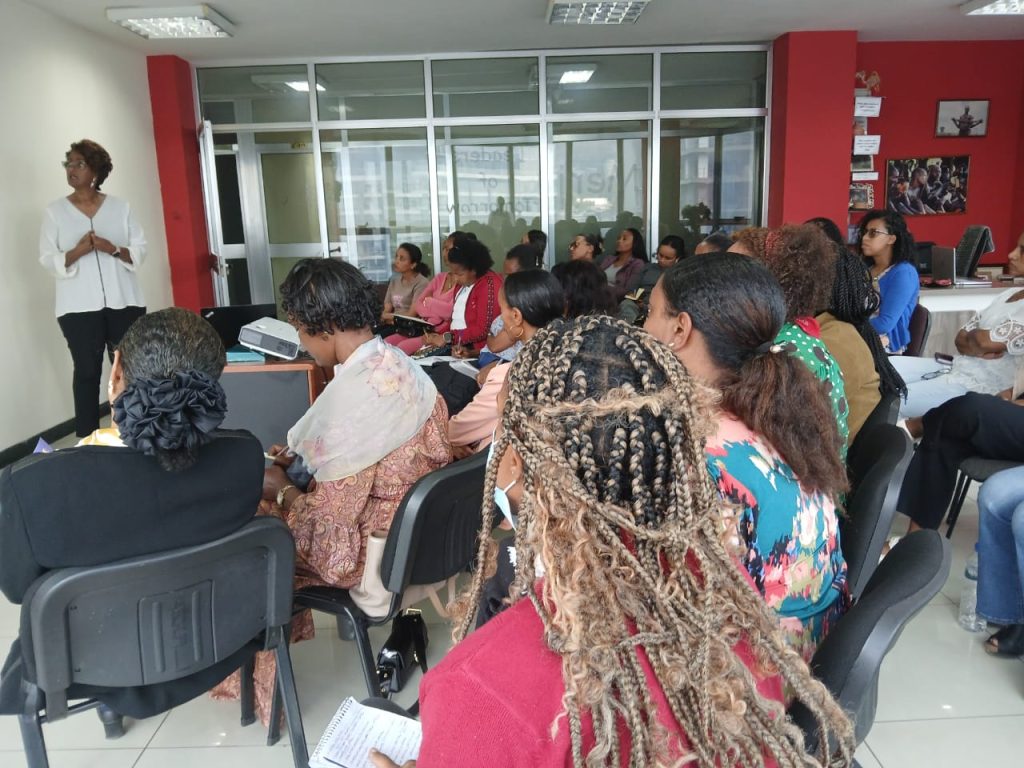
On Saturday afternoon, December 20, 2025, AWiBers gathered at the AWiB Resource Center for a seminar titled “The Effect of Trauma on Relationship,” facilitated by Dr. Seble Hailu, General Manager of Endaee Communication Consultancy Counseling & Training Services PLC.
Dr. Seble opened the session by explaining trauma as a deeply distressing experience that overwhelms an individual’s ability to cope and can have lasting emotional, psychological, physical, and relational effects. She emphasized that trauma is not only about the event itself, but how it is processed and stored in the body and mind.
The session explored various types of trauma, including individual, family, group, community, cultural, racial, historical, intergenerational, and mass trauma. Participants also learned about Adverse Childhood Experiences (ACEs) and how early life trauma can shape emotional regulation, coping strategies, and relationship patterns in adulthood.
Dr. Seble discussed how trauma affects the autonomic nervous system, triggering survival responses such as fight, flight, freeze, fawn, or shutdown. The concept of Neuroception helped participants understand how the brain unconsciously scans for safety or danger, which can influence reactions within relationships. Through an interactive think-pair-share activity, participants explored dissociation, its types, and its connection to trauma.
The session highlighted how trauma can impact relationships by affecting trust, emotional safety, intimacy, communication, and boundaries. Participants reflected on their own relationship patterns and learned that healing relationship trauma is possible through awareness, healthy communication, boundary-setting, emotional regulation, and seeking appropriate support.
Dr. Seble concluded by emphasizing that trauma healing is not linear and that understanding emotional triggers is a key step toward building healthier and more fulfilling relationships.
Major Takeaways
- Trauma affects individuals at personal, relational, and collective levels and can persist if not addressed.
- Early life experiences, including ACEs, significantly influence adult relationship patterns.
- Trauma alters the nervous system, often keeping the body in survival mode even in safe situations.
- Neuroception and dissociation play key roles in how trauma survivors perceive and respond to others.
- Trauma can disrupt trust, intimacy, communication, and the establishment of boundaries in relationships.
- Healing is possible through self-awareness, healthy communication, clear boundaries, and professional or social support.
Share to your circles!