Parenthood & its Stewardship Responsibilities Recap
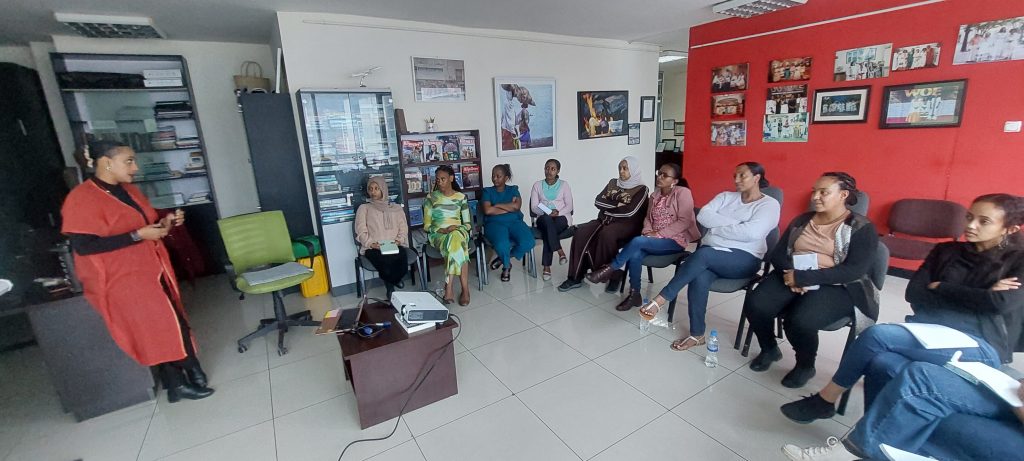
Saturday afternoon, September 7, 2024, members who attended the morning session along with other attendees took part in the session on parenthood and its stewardship responsibilities facilitated by Knojit Moges, Co-founder of MALD (Multiple and Alternative Ways of Learning and Development) School.
Konjit began the workshop by asking participants to discuss in pairs of two on how well they know their children. She then discussed how children have different ways of absorbing information including visual, auditory, tactile and kinesthetic means of understanding their environment.
She raised important points on how each child is different and we have the ability to greatly influence their lives at an early age. Konjit underlined that it is our responsibility to set up our children for success by helping them unleash their potential, learn by making mistakes and explore different areas of their interest so they find their passion and thrive. Konjit concluded by noting that the bad news is that everything you do can influence a child’s life. Yet the good news is also that everything you do can influence a child’s life.
Key Points
- Children have different ways of learning by seeing, hearing, touching and moving
- They have different preferences when it comes to their environment such as dim or bright lighting, cool or warm place, quiet or noisy environment
- They also have different emotional styles. They may be more comfortable with leading or with following, they may prefer structured or unstructured learning
- They may have different social interaction preferences. They may learn from watching their peers or may learn more from adults
- Children with analytical psychology are logical and have the ability to retain minor details while those with global psychology connect emotionally, are impulsive and remember only major details.
Major Takeaways
- We must identify how our children perceive their environment in order to provide them the appropriate and best tools for their learning and development
- We will support our children in their learning if we encourage their effort more than the outcome. This will help them have a growth mindset rather than a fixed mindset which sets them up to fail.
- Early childhood up to 9 years old is when children imprint most of their learning and attitudes. This is where we can make the most impact.
Share to your circles!