Haset Second Cohort Summit
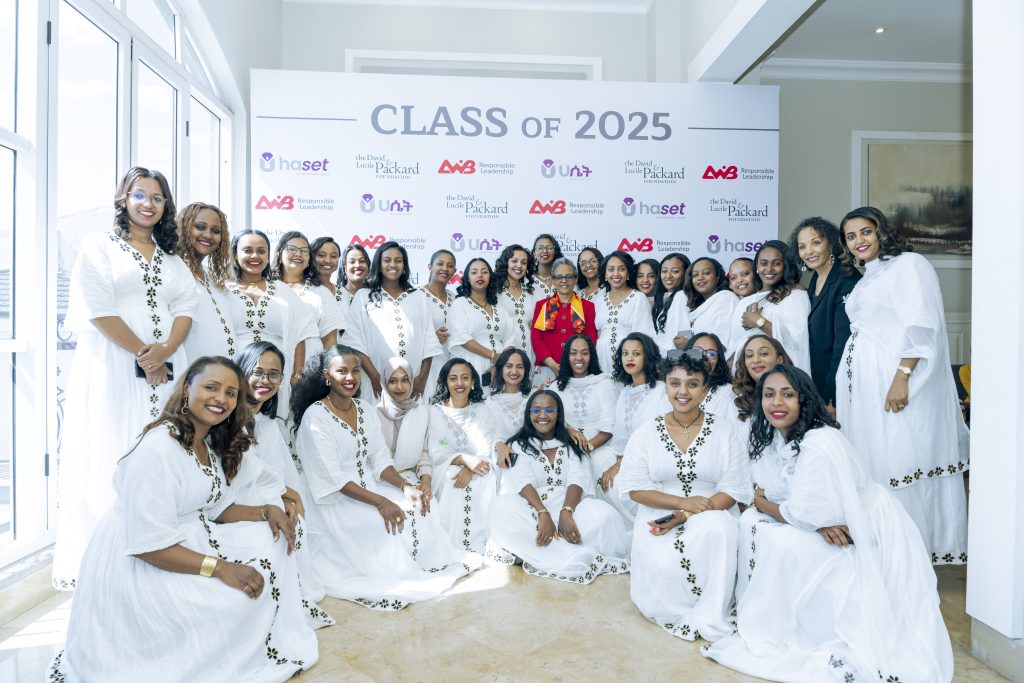
The Haset Summit held on December 11, 2025, at the Haile Grand Resort was nothing short of extraordinary. It was a day charged with reflection, pride, and collective becoming. From the moment participants entered the room, there was a palpable sense that this gathering was not merely a graduation, but a celebration of inner transformation.
The program opened with Tinsae, a Haset participant, who set the tone with warmth and conviction. She honored the women in the room who dared to step into their potential and reminded everyone that the day was about celebrating their courageous journey through the Haset Leadership Program. Quoting, “The higher you go, the more you know that the leadership potential you are looking for is within you,” she captured the essence of Haset as a journey of clarity, courage, and authentic leadership.
The summit officially commenced with Yemisrach Belayneh, Regional Advisor at the Packard Foundation, whose calm yet powerful presence grounded the room. With over two decades of experience, she congratulated the graduates and acknowledged distinguished guests, including H.E. Dr. Roman Tesfaye and Ambassador Olivia Leslie from the Embassy of Ireland. She expressed deep gratitude to everyone who helped birth and sustain Haset from the design team, facilitators, and AWiB staff recognizing Haset as a collective labor of purpose.
Yemisrach then took the audience back to the origins of Haset, sharing how the program was born in 2022 from Dr. Meseret Kassahun’s research on the barriers facing Ethiopian women leaders. She spoke candidly about the realities women face; the double burden, internalized self-doubt, lack of confidence, and the absence of supportive circles adding how Haset was intentionally designed, by Ethiopians for Ethiopian women, to address these challenges holistically. She emphasized sisterhood as the cornerstone of transformation and affirmed AWiB’s role as the anchor institution ensuring the program’s sustainability. “Today,” she said proudly, “we celebrate the graduation of the second cohort,” affirming that Haset’s legacy will continue through committed partnerships.
A short recap video followed, (Watch Here) visually capturing the journeys of women across both cohorts. As the screen flickered with moments of growth, vulnerability, and joy, the room collectively reflected on what makes Haset unique: visibility, sisterhood, communication, and the courage to grow from within.
The keynote address was delivered by H.E. Dr. Roman Tesfaye, Former First Lady of Ethiopia and CEO of the Hailemariam & Roman Foundation. Her words filled the room with pride and purpose as she congratulated the Class of 2025 and honored their families and supporters. She reminded the graduates that this was more than a ceremony, it was a milestone in the rise of 35 remarkable women poised to shape Ethiopia’s civil society. Sharing her own unplanned leadership journey, she spoke of doubt, responsibility, and service, underscoring that leadership is not defined by titles but by integrity, empathy, and courage. “You are leaders,” she affirmed, “not someday, but today.”
Another powerful video followed, (Watch Here) spotlighting the individual leadership journeys of the graduating cohort, before the stage transitioned into the panel discussion, “Journey to Leadership.”. The panel was moderated by Amen Aniley, a proud Haset fellow and a development-focused energy professional. The four panelists and Haset graduates were: Eskedar Mesfin, Project Coordinator and Health Officer at Faith in Action; Meaza Melaku, Senior Peace Advocacy and Ethics Officer at the Ethiopian Orthodox Church Development and Interchurch Aid Commission; Nardos Tewodros, Program Manager at Tikurt Lesetoch Ena Lehtsanat Mahiber (TLLM), and Meskerem Mulugeta, anesthesiologist, gender consultant and writer. The conversation unfolded with honesty and depth as they shared stories of self-doubt, career pivots, motherhood, imposter syndrome, and rediscovering their path to their true purpose. Each testimony echoed a common truth: Haset served as a mirror revealing their strengths, pinpointing their gaps, and offering tools to lead with clarity.
From the Tree of Life exercise to wellness sessions at dawn, from negotiation skills to emotional intelligence, the panelists spoke of how Haset reshaped not only how they lead at work, but how they show up in life. Sisterhood emerged again and again as the program’s most enduring gift – 35 women bound by trust and accountability.
As the audience reflected, comments and questions flowed, the conversation turned toward sustainability and paying it forward. Graduates spoke of alumni initiatives, mentorship, knowledge-sharing platforms, and their commitment to extending Haset’s impact beyond themselves. The message was clear: Haset does not end at graduation but multiplies through their exemplary action.
As the graduates and participants walked out of the hall for lunch, what lingered was not just inspiration, but certainty. Haset is a unique program that helps women come home to themselves.
The afternoon session of the Haset Summit carried forward the spirit that defines the program: honest reflection, bold dialogue, and women speaking from lived experience. The leadership dialogue opened with a grounding reminder that Haset is not simply about adding new skills, but about discovering who we truly are. Growth, the speakers highlighted, is not only upward but inward; the deeper we grow, the higher we rise. The dialogue featured Tigist Dessalegne, a digital innovation professional; Haimanot Mulatu, a public health professional; Meaza Awibachew, a development policy expert and executive director; Netsanet Megerssa, a sociologist and social anthropologist; and Nardos Delelegne, a governance and impact practitioner. Together, they explored the nature of impact, including its positive and negative effects, and how leadership influences both individuals and communities.
Nardos began the dialogue by asking, “What is impact?” The panel reflected on how leadership decisions influence not only individuals but also the wider community. The conversation then turned to what defines a woman leader. The speakers referenced global figures such as Mother Teresa in humanitarian work and Malala in girls’ education, while emphasizing that many women leaders inspire daily at the community level. They challenged the assumption that women leaders are automatically empathetic, highlighting that empathy is a leadership quality, not a gender trait. Several speakers shared personal experiences of self-doubt during their early careers. Opportunities existed around them, yet internal hesitation often held them back. They stressed the importance of readiness, personal reflection, and stepping forward when opportunities arise. Tigist noted that women often refrain from applying for leadership roles unless they meet all requirements, whereas men frequently step forward even when they meet only some. Haimanot added that seizing opportunities, even in the face of uncertainty, is essential for growth.
The discussion then addressed the structural and cultural barriers facing women in the workplace. The panel highlighted that women are statistically less likely to be promoted and frequently face harassment, sometimes even more under female supervisors. Meaza and Netsanet spoke about maternity leave pressures, persistent work–life balance challenges, and limited pathways to decision-making roles within CSOs. Gender-based violence remains a significant barrier, particularly in conflict-affected regions, and women leaders often encounter undermining in meetings, alongside internalized messages of inferiority. At the same time, the panel acknowledged progress: Ethiopia has seen women ministers, organizations such as AWiB and EWLA have strengthened women’s leadership platforms, and initiatives like Haset continue to build intentional leadership pipelines.
Across the dialogue, consistency emerged as a key theme: consistent learning, consistent engagement, and consistent presence. Mentorship was presented not only as a formal arrangement but as a community practice, supported by both women and male allies. The speakers emphasized the importance of building strong networks, fostering reflection, and staying committed to personal growth. Leadership, they agreed, requires women not only to advance themselves, but also to lift others along the way.
The program then transitioned into a showcase of six volunteer projects completed by the graduates, reflecting leadership in action. The projects focused on Mental Health, presented by Helina Fisseha; Digital Literacy, led by Hawinet; Youth Empowerment, presented by Tsedenai Hailu; Women’s Empowerment, led by Yordanso Asnaker; Early Childhood Development, presented by Meheret Tena; and Knowledge Management, led by Dagmawit S. During the coffee-break gallery walk, attendees explored each project in depth, engaging with the graduates and discovering opportunities for collaboration and support.
The afternoon continued with a session by Shaleka Haile Gebresilase on the importance of male partnerships. He emphasized the mental strength women carry and the role men must play as supportive partners rather than gatekeepers. His message reinforced that advancing women’s leadership is a collective responsibility. “Don’t let anyone tell you that you can’t. Women are capable of doing anything they set their minds to,” he encouraged.
The Summit then moved toward its most anticipated moment: the closing remarks and certification ceremony. Before the certificates were awarded, the audience heard from Dagmawit Moges, a distinguished national and continental leader. She reflected on her personal leadership journey, sharing the challenges and pushback she encountered along the way, and the lessons she learned about resilience, vision, and impact. She emphasized that transformative leadership begins with believing in one’s own capability and taking action, even in the absence of external support. “When you are a transformative leader, you don’t wait for someone to give you permission or support, you create change and lead from where you stand,” she told the audience.
Dagmawit highlighted the importance of supportive environments, mentorship, and networks, encouraging the graduates to seek guidance but also to trust their own judgment and intuition. She spoke about the critical role women play in shaping their communities and the continent, noting that interventions like Haset are essential for creating opportunities and fostering confidence among emerging women leaders. Drawing on her experience at the highest levels of national and continental service, she reminded the graduates that impact is both personal and collective: every decision, every action, and every leader contributes to the broader transformation of society.
In addition, Dagmawit made a personal commitment to the program and its graduates, pledging to actively support Haset’s initiatives through resource mobilization. She expressed her dedication to helping the next generation of women leaders access the guidance, networks, and resources they need to thrive, emphasizing that her involvement is a long-term promise to contribute to their growth and success. Her words resonated deeply, inspiring graduates to step boldly into leadership roles and to lift others along the way.
The event concluded with a warm and celebratory finale. Nahu Senay Girma, Founder and Director of AWiB, called the graduates to the stage, where Shaleka Haile Gebreselassie and Dagmawit Moges presented certificates to each participant. Families and friends cheered as the graduates were recognized for their achievements. Group photos captured the pride and joy of the moment, marking a meaningful close to the second cohort of the Haset Women Leadership Program.
Share with your Circle!