
- This event has passed.
The Dearth Women in Leadership of in Ethiopia
March 25, 2016 @ 2:00 pm – 6:00 pm
The Dearth Women in Leadership of in Ethiopia
What is the Missing Piece? What are the Implications for Ethiopia’s Development?
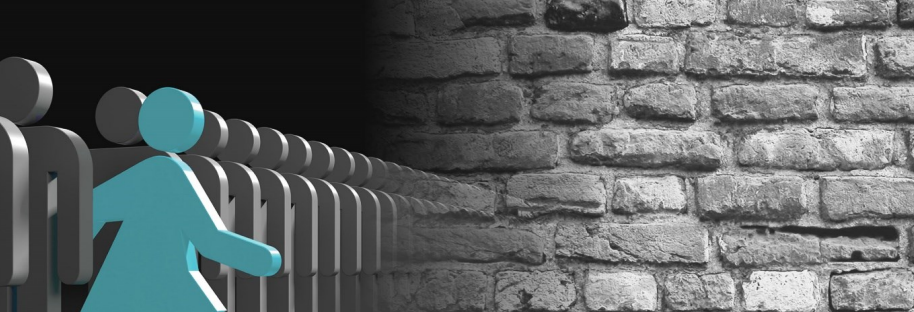
The Dearth Women in Leadership of in Ethiopia
“Feminism has fought no wars. It has killed no opponents. It has set up no concentration camps, starved no enemies, practiced no cruelties. Its battles have been for education, for the vote, for better working conditions, for safety in the streets, for child care, for social welfare, for rape crisis centers, women’s refugees, reforms in the law”. ~ Dale Spender, women’s activist, writer and a teacher, “Man Made Language~
Around the world, women’s lack of representation in government, especially in high-level executive and legislative bodies, limits their influence over governance and public policies. But the argument holds women’s participation in decision-making is crucial for ensuring women’s equality and rights. Where women have participated actively in public policy, they have been able to raise the visibility of women’s issues and work toward ending gender inequality. But women have made slow progress in the political arena, even though in some parts of the world the gains in other areas such as education, employment and health seem considerable.
Women’s representation in legislative bodies has increased in most parts of the world, but it is still at a low level. In 1990, the United Nations called for women to hold a “critical mass” of 30 percent of parliamentary seats — a level believed to be sufficient to bring about change in national politics. Twenty years later, only 26 countries out of 186 reached or exceeded the 30 percent mark of women’s representation in the single or lower house of parliament, according to the International Parliamentary Union. In the United States, women held 16.8 percent of seats in the House of Representatives in 2010, slightly lower than the world average of 19 percent of lawmakers in the lower houses worldwide.
These global figures conceal large regional disparities: Women make up 42 percent of parliament in Scandinavian nations but just 12 percent of Arab assemblies. A few African countries top the list: In Rwanda and South Africa, women hold 56 percent and 45 percent of seats, respectively. In Sweden, women occupy 45 percent of parliamentary seats.
Progress in women’s representation in the executive branches of government is even slower. In 2010, just 11 of 192 heads of government were women. Globally, women hold only 16 percent of ministerial posts. Finland stands out in this category, with 63 percent of Cabinet-level posts held by women. (Women in the World Today, by Lori Ashford)
In Ethiopia, the figure is even dismal. Even though there is no formal study done regarding women in decision-making position, only 12% at ministerial post are women. There are no corporate leaders as CEOs and a few civil society leaders. In parliament, however, the figure seems to be rising– 38.8% female members.
Some studies show world’s women working population at 46% and growing but the share of women in leadership position is critically low even though the evidence for recruiting and promoting women in the workplace shows a drive for high performance!
What is missing? What must be done in our nation to improve the numbers & quality of women participation in the legislative and polities? What are the challenges women face to have the decision-making authority in every sector of society?
The major constraint in Ethiopia is low level of education that bars aspiring women from entry level leadership position. Or those few in leadership often do not have control over large budgets which limits their influence and the resources they can allocate to gender equality that hinders them from affecting any kind of change. What needs to be done? Whose responsibility is it to make it right?
The commitments and goals pertaining to gender equality in decision-making at the political and other sectors have not yet been achieved. Ethiopian women are under-represented in decision-making and leadership in every area. As a result women do not participate fully in decisions that shape their lives and the country misses out on the full potential of its half of the human capital.
To reflect on issues mentioned above, AWiB has invited the Prime Minister, his Excellency Hailemariam Desalegn.
This extraordinary seminar, made possible because of UNDP-Ethiopia office will have two parts.
The first part invites speakers to reflect on the gaps, the unfulfilled promises and the inhibiting environment.
Speakers:
- Ms. Mebrat Beyene, Former head of consulate for the Scandinavian Countries
- Mr. Tadesse Kassa, CEO of Tiret Corporation, Women’s rights advocate
- Mr. Tewolde Gebremariam, CEO of EAL a recent recipient of “Most gender focused CEO Award 2015 from The Leading Women of Africa (LWA), South Africa)
Moderator: Selome Tadesse, Founder, Emerge Leaders Consultancy & Training Plc
The 2nd part will explore “Way Forward”: What must be done to remedy the Ethiopian women participation in the political arena? What model must be pursued to improve their numbers in leading major Corporations? What support must women receive to give them visibility in Academic Institutions? What needs to be achieved to have women as board of directors of government & corporate entities? After all, women as board of directors enable sustainable business results. Women with decision power in government enable just society.
Speakers:
- Selome Tadesse, Founder, Emerge Leaders Consultancy & Training Plc to speak on “What should women themselves do to improve the odds”
- Frealem Shibabaw, Director, Ethiopia School Meal Initiative to speak on Education: “How Ethiopia’s school fares in enabling the female population to participate in the decision making apparatus”.
- Daniel Kibret, Author, Advocates of Women’s rights to speak on “where does it all start?”
Moderator: Billene Seyoum, Co- Founder, Setaweet
Partner: UNDP