Leadership Shaping Social Dynamics: The Equalizing Power of Education
As I prepare to share my experience at the May Forum on Women in Lead: the invisible hurdle and its impact, I reviewed what has been addressed in the past 15 years. AWIB’s May forum nudges the nation to evaluate leadership in its different forms: women’s agency, unlocking human potential, strategic, transformational, action-oriented, adaptive, agile, and ethnic leadership, at a personal, organizational, and national level, looking at them through a gender lens.
This month, AWIB will hold its annual May forum on the thought-provoking theme of “Education: The Great Equalizer or Divider?” This is the 11th forum with a unique flavor, focusing on education leadership. Does education have the power to provide equal opportunities irrespective of one’s background and socio-cultural circumstances? Let me rethink my experience in delivering training in November.
The training was entitled “Enhancing the capacity of Teachers on Mental Health and Psychosocial Support in Conflict-Affected Areas of Ethiopia – Afar, Amhara – North Wollo, and Tigray organized by The International Institute for Capacity Building in Africa (IICBA). The primary purpose was to contribute to the recovery of schools and learning environments by strengthening the education sector’s capacity and responding to teachers’ and learners’ immediate mental and psychosocial well-being needs.
One of the devastating effects of war has been stopping children from going to school. War demolishes schools, established systems, educational materials, and equipment. Moreover, it devastates the psychological stamina of students, teachers, and school administrators to see a bright future for life.
In this scenario, reinvigorating the teaching-learning process is believed to give hope as children return to school. On another note, beyond the physical damages of classrooms that are destroyed, chairs, desks, black/white boards missing, which they managed by sitting on the floor, the emotional devastation is also quite visible that children may come to class drunk, disrespect their teachers, feel depressed, disturb the teaching-learning process, teachers leave their job and absenteeism increases to look for something they can survive with. When education is considered a place for restoring hope, restoring the post-war resilience requires a different model to reinforce education as an equalizer.
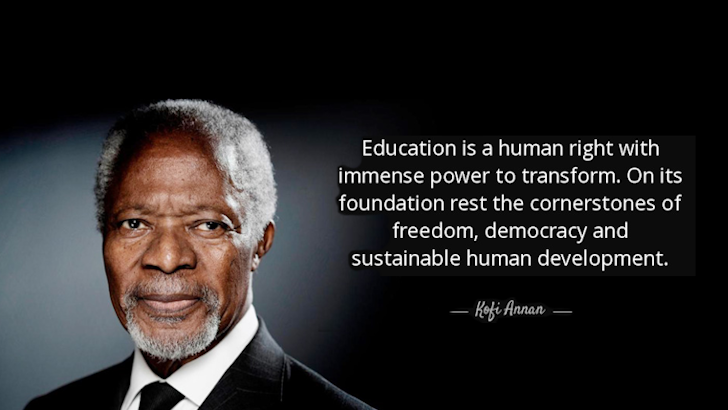
An assessment was conducted to determine the mental health conditions of teachers, school administrators, and learners in conflict-affected areas of Northern Ethiopia. Most of the teachers, school administrators, and learners experience severe distress, moderate to severe anxiety, and depression, which require serious and immediate intervention to help them cope and manage all these psychosocial problems. In response, a new model incorporating mental psychosocial support was introduced to address the specific needs of learners and educators in the post-conflict areas, along with providing regular teaching-learning conditions. Education as an equalizer should consider the particular needs and contexts of what creates inequalities. In some contexts, like war, education may sound like a luxury, though education is a human right. It sprinkles light in the darkness of hopelessness.
The training sensitized teachers to their trauma and equipped them to deal with learners’ mental health and psychosocial problems. The unique feature of the training was following the principles of transformative pedagogy so that the trainees could integrate the concepts, issues, and interventions of mental health and psychosocial support in the education system in general and in the school environment in the teaching-learning process in particular. Education as an “equalizer” requires the attention of education leaders, and the general context of a country to work in a multi-layered approach to deal with manifestations of inequality.
Considering education as an equalizer may sound idealistic, but working towards the many determinants will help to address the inequality. Still, socio-economic status, security, and safety of learners and educators all matter in providing and accessing quality education.
I conclude that education itself is not a divider or an equalizer. However, leadership determines this social machinery to sensitively address gender, context, and initiatives to address with equity lenses and respond to differential needs accordingly, prioritizing access to quality education for a nation to produce a resilient generation that recreates its future.
I encourage educators, educational administrators, civil servants, professionals, business people, and development workers to attend the 2025 May Forum on May 29, and co-think to reengineer what matters most to our nation.
Seble Hailu (Ph.D.) May 20, 2025