Find a Way to Fly; Ending Self-Punishment
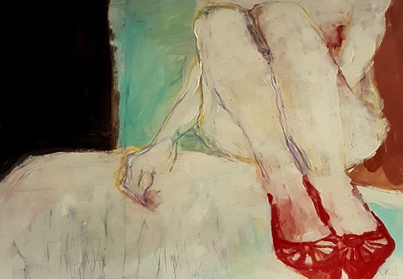
Image source: ‘Kyros 56- Timelessness’ by Jylian Gustlin
Our humanity dares us to bargain in the field of self-punishment, endlessly roaming around striving for perfection, fearing mistakes, and accepting the necessity of suffering to relieve guilt. The idea that suffering is required to correct imperfection is a trap I usually fall into.
In a cultural and social context, self-worth is deeply tied to reputation and how other people perceive us. Therefore, we indulge in shame and withdrawal to return to the good graces of the collective. Usually, women are socialized to internalize pain, self-blame, and carry emotional burdens silently, while men suppress feelings due to norms about toughness and ‘toxic masculinity’.
These abusive and addictive practices are deeply embedded in our subconsciousness, and we don’t usually realize the absurdity of it. While our ancestors used literal self-flagellation to punish their wrongdoings, we dredge in metaphorical self-flagellation [emotional or psychological]- harsh self-criticism, excessive shame, and rumination.
Why do we do it?
- We do it because we think that we deserve the punishment.
- We believe that suffering in any shape or form improves our character.
- Just like in physics, when one force pushes in one direction, another must act in the opposite direction to restore equilibrium; guilt becomes the force, self-punishment becomes the counterforce. Once balanced, we feel permitted to move on.
Strangely, punishing ourselves brings emotional homeostasis to ‘settle the score’ so we can move forward. This method may provide a temporary resolution until the guilt returns, and the cycle continues.
I have a bone to pick with the first person who came up with the saying ‘what you see is what you get’, it couldn’t be further from the truth, I believe. Because what we usually see is an illusion- a curated act, a performance, shaped by our desperate need to appear complete, laid back, or unbothered.
But show me a perfect human- someone who never slips, never wrestles with guilt, never spirals in silence- and I will show you a unicorn. The silver lining is, everybody goes through something they never speak about, even though it doesn’t seem so on the outside, you are not the only person dealing with internalized resentment from time to time, therefore be kinder to yourself.
As simple as it sounds, compassion is the most important tool we can use for our well-being. Specifically, I’m speaking to those who confuse self-harm with self-discipline. We can become the best version of ourselves by taking control without hating or shaming our process. Nobody is holding us hostage and forcing us to deteriorate our mental state, we are doing that on our own. What if we just decide to love ourselves so much that harming ourselves becomes self-betrayal?
Written by: Ruth Mekasha
Share to your circles!