Becoming Who We Really Are and
the Healing Power of Art
Until you make the unconscious conscious, it will direct your life, and you will call it fate.
~ Carl Jung
Carl Gustav Jung, the Swiss psychiatrist and founder of analytical psychology, spent his life wrestling with one profound question: “How do we become who we really are?” This inquiry lies at the heart of his psychological theories and spiritual explorations. For Jung, the journey toward authenticity was not merely a psychological process but a spiritual and existential issue. His concept of individuation, the process of becoming one’s true self, offers a roadmap for navigating the complexities of identity, unconscious forces, and the integration of opposites within the psyche.
2025’s global theme, “Access to Services: Mental Health in Catastrophes and Emergencies,” has brought renewed attention to the urgent need to provide mental health and psychosocial support to people affected by crises, such as conflict, natural disasters, and other emergencies. The goal is to ensure that mental healthcare is a critical part of emergency response and not an afterthought.
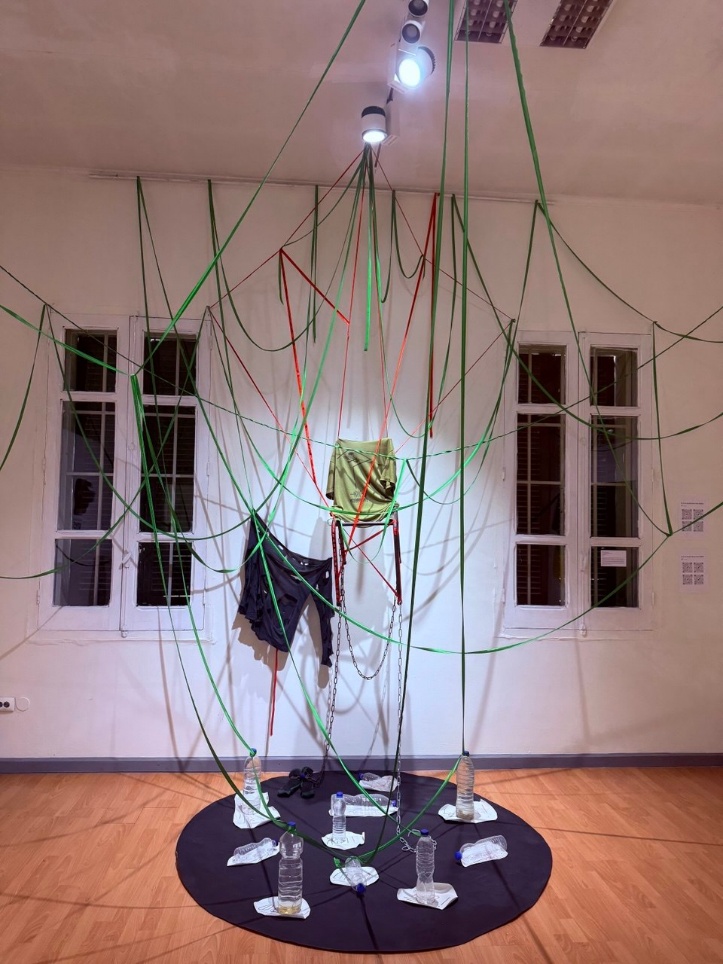
As a psychologist, I’ve had the privilege of engaging with this theme not only in theory but in practice. In October, I was invited to speak on a panel at the Gebre Kristos Desta Art Museum at Sidist Kilo University. The event focused on the role of art therapy in mental health, and the panel included two artists who were also survivors of mental illness, a psychiatrist, and me. Each of us spoke from our lived experience, and the conversation that unfolded was both deeply personal and profoundly Jungian in spirit, combining art and mental health.
Jung’s notion of the “Self” is not the ego, the conscious identity we present to the world, but a deeper, more holistic center of the psyche that encompasses both conscious and unconscious elements. The Self is the totality of who we are, including our shadow (the repressed or denied aspects of ourselves), our anima or animus (the inner feminine or masculine), and our personal and collective unconscious. Becoming who we really are, then, involves a lifelong process of uncovering, confronting, and integrating these hidden dimensions.
At the panel, one of the artists shared how painting helped her confront the darkness she had long suppressed. Her canvases, filled with chaotic strokes and haunting figures, were not just art; they were maps of her inner world. Listening to her, I was reminded of Jung’s belief that symbols and images are the language of the unconscious. Her art was not just therapeutic; it was revelatory.
Jung’s answer to his central question lies in the process he called “individuation.” This is not about becoming isolated or self-centered, but about becoming whole. Individuation is the psychological and spiritual journey of integrating all aspects of the psyche into a coherent and balanced Self. It involves recognizing and embracing our contradictions, paradoxes, and inner conflicts.
In the weeks leading up to the panel, I had a chance to visit with community programs that had embraced expressive therapies: dance, drawing, music, and storytelling, as tools for trauma recovery. I watched as individuals who had endured profound psychological pain found release and meaning through movement, weaving, and color. In one center, a group of young women used traditional dance to process grief and reclaim agency over their bodies. In another, survivors of displacement created murals that told stories of loss, resilience, and hope. These were not just therapeutic exercises; they were acts of individuation in motion.
Jung himself was a prolific artist, filling journals with mandalas, dream images, and symbolic sketches. He believed that creativity was a vital part of individuation, a way to give form to the formless and bring unconscious material into the light of awareness. Art, in this sense, becomes a mirror of the psyche, reflecting not only what we know about ourselves but also what we have yet to discover.
During my presentation at the museum, I spoke about how art therapy enables individuals to bypass the limitations of language and access deeper emotional truths. A simple drawing can reveal a complex trauma. A dance can express what words cannot. In these moments, the boundary between therapist and artist dissolves, and we become fellow travelers on the path to authenticity.
Despite the richness of Jung’s framework, the path to becoming who we really are is fraught with obstacles. Social conditioning, fear of rejection, and the lure of conformity can stifle the individuation process. In modern society, where identity is often curated through social media and external validation, the inner journey can feel countercultural or even threatening.
At the panel, we spoke candidly about stigma, how mental illness is still misunderstood, and how survivors often feel pressured to “perform” recovery rather than live it authentically. One artist said, “I’m not a success story. I’m a work in progress.” That statement stayed with me. It was a reminder that becoming is not a destination but a dynamic, ongoing process.
Jung’s question resonates deeply in today’s world, where mental health crises, identity confusion, and spiritual longing are increasingly prevalent. His emphasis on inner work, symbolic understanding, and psychological integration offers a powerful antidote to superficiality and fragmentation.
The 2025 theme of Mental Health challenges us to reimagine healing not as a solitary endeavor but as a collective one, including those in emergency settings. Through expressive therapies, we create spaces where people can be seen, heard, and held, where the journey to the “Self” is not walked alone but in community.
“How do we become who we really are?” Jung’s question is not one with a simple answer, but a lifelong invitation to explore the depths of our psyche, confront our shadows, and embrace the fullness of our humanity. Through processes of individuation and creative expression, such as art, dance, and storytelling, we move beyond masks and roles toward a more authentic, integrated existence.
My recent experiences, witnessing expressive therapies in action, engaging with fellow practitioners and survivors, and reflecting on Jung’s legacy, have reaffirmed my belief that healing is both an inward and an outward journey. The canvas, the stage, the dance floor, these are not just spaces for art. They are sacred grounds where the self emerges, piece by piece, stroke by stroke, step by step.
Are you willing to individuate, integrate the unconscious and the conscious, face your shadows and bright sides? The process of self-discovery in the personal and collective unconscious is fascinating.
Written By: Dr. Seble Hailu
Share with Your Circle!
Thank you, Dr. Seble, what a narration, full of knowledge, teaching and guidance!! I went through it and truly, it brings us to the individuation concept to trabslate it into practice to stay sane and clean inside out. If we do mass sport, dancing, art, etc in Rotary, I can imagine the results of growing members and attracting the youth into Rotary/Rotaract clubs. Just a thought! Thanks again!