


- This event has passed.
Mob Mentality: A Culture Rooted in Fixed Mindset
April 2 @ 4:00 pm – 8:00 pm
Mob Mentality
A Culture Rooted in Fixed Mindset

Mob Mentality: A Culture Rooted in Fixed Mindset
“They play it safe! Are quick to assassinate what they do not understand. . . Ingesting more and more fear with every act of hate on one another. They move in packs…They feel most comfortable in groups, less kill to swallow. . . They are us! This is what we have become! Afraid to respect the individual!”
– Erykah Badu
In the wild, a herd of wildebeest will plunge into a river not because the waters are safe, but because the bodies first in line jumped in. Momentum replaces judgment; fear wears the mask of unity, and even those who sense danger are carried forward by the weight of the many. We have seen this in the recent conflict in northern Ethiopia, where a similar current swept through our lives, narratives hardened into commands, silence passed as loyalty, and neighbors learned to move with the loudest voices rather than their own conscience. Like hooves striking water, words were repeated until they became truth and doubt felt like betrayal. The tragedy is this: animals follow instinct to survive, but humans surrendered discernment and, in doing so, forgot that wisdom begins when one voice dares to stop, see, and refuse to run with the herd.
Mob mentality, also known as herd or crowd mentality, is a psychological pattern in which people surrender independent judgment in favor of group beliefs and behaviors. Studied across biology, psychology, and sociology, it explains why individuals often listen more closely to others than to their own reasoning, conforming even when something feels wrong. We see it everywhere: in animal herds and bird flocks, but also in voting booths, demonstrations, religious gatherings, riots, and everyday decision-making. Yet, history offers stark warnings, patterns of times when repetition became “truth” and belonging outweighed conscience.
Ethiopian history also reminds us that unity and discernment are not opposites. At Adwa, leaders debated fiercely before acting together; collective action was grounded in independent thinking. Yet in more recent times, people moved with the crowd not because they believed deeply, but because standing apart felt dangerous. Unlike animals that follow instinct to survive, humans chose the crowd over reflection, mistaking volume for wisdom.
This collapse of independent thinking may be rooted in fixed mindset – an internal belief that abilities are unchangeable. This mindset leads people to avoid challenges out of fear: fear of isolation, or worse. As fear becomes consuming, many stop trusting their inner moral compass. Yet, it is undeniable that a collection of strong individuals is the only way forward to creating strong collectives, communities and nations. So, the pertinent question to ask ourselves, as individuals is: What fear persuaded us to abandon independent thinking and trust the herd more than our own moral and intellectual capacity?
“A single person within a circumstance can move one to change, to love herself, to evolve!”
– Erykah Badu
Talking Points
- When we align with a group, how do we know whether we are acting from belief or from the need to belong? What signals show up in your body, thoughts, or behavior?
- What are the fears that hold power over us in Ethiopia’s context – the fear of being wrong, the fear of standing alone, or other fears and how does that shape our choices?
- What would it mean for us to take the wheel behind our own decision making instead of following the herd; in our workplace, community, or family?
- As individuals, before we agree publicly or act collectively, what questions do we rarely ask ourself but we should?
Speakers

Rakeb Messele Aberra, Human Rights Advocate & Leader
Rakeb is a human rights advocate with nearly three decades of experience advancing human rights, institutional reform, inclusive governance and developing capacity to transform human rights organizations into effective, credible and independent agents. She has ample knowledge and experience in leading strategic initiatives in human rights, child rights governance, gender equality, migration governance adapting global frameworks to local contexts. She is currently working as an Independent Consultant advising international organization in strengthening human rights organizations, migration governance, human rights due diligence and responsible business conduct, etc.
From March 2020 to August 2025, Rakeb played a pivotal role at the Ethiopian Human Rights Commission (EHRC), initially as Senior Strategic Advisor and later as Deputy Chief Commissioner, including as an Acting Chief Commissioner. During this time, she co-led a major institutional reform and transformation that strengthened EHRC’s capacity, aligned its operations with human rights principles, and secured its ‘A’ status accreditation under the Paris Principles.
She supported in building and leading a lean, values-driven team of over 340 staff, spearheaded the development of a participatory five-year strategic plan, and provided transformative leadership in programming and donor engagement.
Before joining EHRC, Rakeb served with Save the Children Sweden as Regional Child Rights Advisor, first in West and Central Africa and later in Asia, where she supported child rights programs and strengthened civil society organizations across more than 16 countries. Earlier in her career, she collaborated with organizations such as the African Child Policy Forum, the Ethiopian Women Lawyers Association, UNICEF, and the International Organization for Migration, focusing on human rights advocacy, migration management, and protection systems for women and children. She holds an LLM in Human Rights and Democratization from the University of Pretoria and an LLB from Addis Ababa University.

Dr. Seble Hailu, Psychologist
Seble Hailu (Ph.D.) has extensive work experience in gender, education, HIV/AIDS, management, community mobilization, research, and training in government, non-government organizations, private companies, and UN agencies. She provides consultancy and training on her areas of expertise, hosted by private, international, multilateral, and bilateral organizations, and has taught management and psychology-related courses at higher learning institutions.
Seble is deeply committed to giving back to her communities. Her leadership roles included serving as the President of the Association of Women in Business (AWiB) and being actively involved in young women’s personal and professional development. Currently, she serves as the Board Chairperson of the Rotary Clubs of Ethiopia.
Seble is also a media personality and thought leader. She uses her platform to answer psychological questions on radio shows, write blogs and articles for the AWiB and Addis Fortune newsletter, and share her knowledge through her YouTube channel. She has a strong belief in addressing the psychological trauma in her country and has designed projects to tackle war trauma that lasted over a year. Additionally, she envisions addressing youth unemployment through entrepreneurial training.
Seble graduated with a Doctor of Philosophy in Sociology/Social Research from Omega Graduate School, Dayton, Tennessee, in 2024. She earned her first degree in Management and Public Administration from Addis Ababa University, her second degree in Educational Psychology from Addis Ababa University, and Counseling and Human Relations from Liberty University, USA.
Moderator
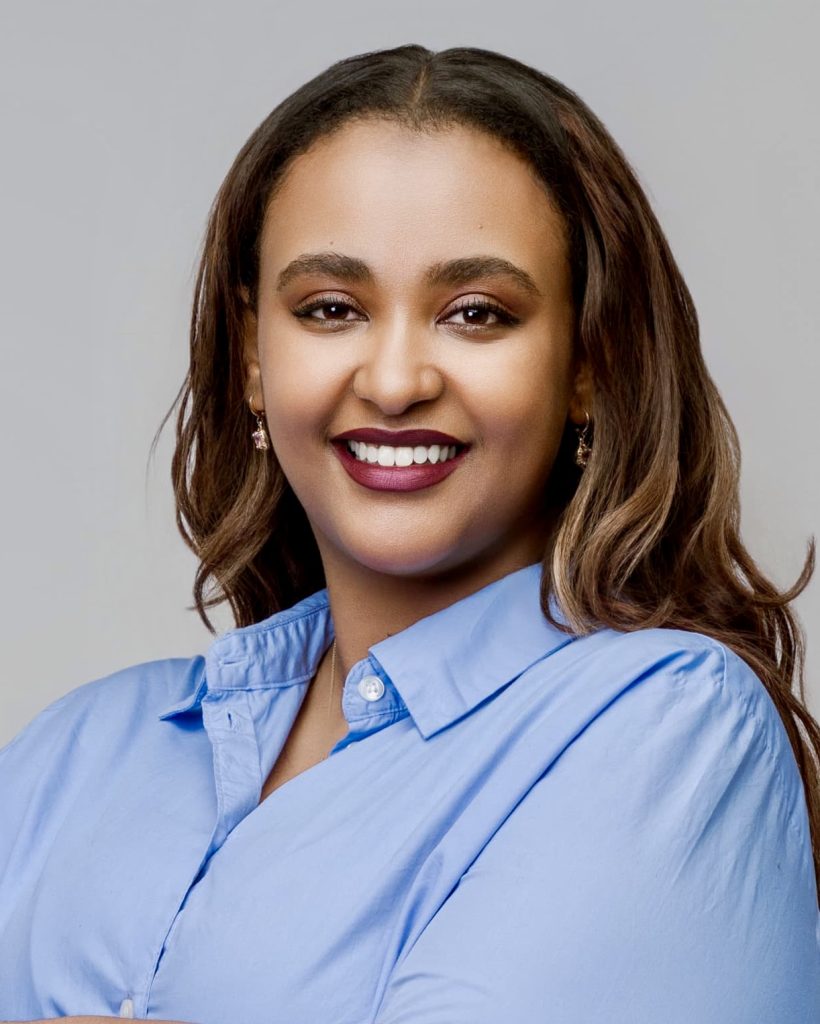
Sewit Haileselassie Tadesse, Economist and Gender Specialist
Sewit Haileselassie Tadesse is an economist and gender specialist with over a decade of experience advancing gender equality and inclusive development across policy, research, and international programs. She currently works with the United Nations Capital Development Fund (UNCDF), where she contributes to global efforts to strengthen gender-responsive approaches in economic systems and public policy.
Sewit is recognized for her leadership in promoting women’s economic empowerment and for her contributions to policy dialogue on gender, governance, and peacebuilding, including initiatives linked to the United States Agency for International Development (USAID) and advocacy platforms of the African Union. Combining strong analytical skills with interdisciplinary insight, she brings both academic rigor and strategic vision to advancing inclusive and equitable development.
Mob Mentality: A Culture Rooted in Fixed Mindset
Sponsor

Merit Properties
Merit Properties is a premier real estate development company in Ethiopia, driven by a legacy of over 15 years of diversified business
excellence. The company was originally established as For You Trading, an oil distribution enterprise, marking the foundation of a strong business journey built on vision, quality, and trust.