The Art of Questioning Recap
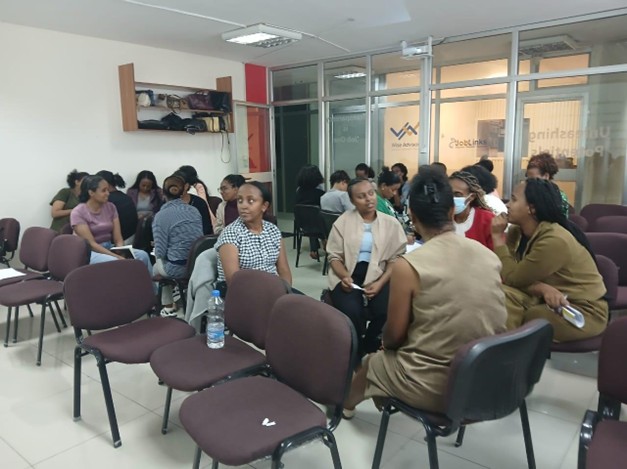
On Saturday morning, December 20, 2025, AWiBers kicked off the day with an engaging seminar on The Art of Questioning by Bethlehem Hailu, Project Manager at AWiB. The session explored how questioning is not just a communication skill but a core element of critical thinking, learning, and personal and professional growth.
The facilitator opened the session by inviting participants to reflect on how questioning has impacted their lives, particularly moments when asking questions influenced major decisions or brought clarity, even when the process felt uncomfortable. This discussion highlighted the role questioning plays in our day-to-day lives and helped set the tone for the entire session.
The session emphasized the importance of questioning and how intentional, well-crafted questions deepen understanding, promote meaningful conversations, and strengthen relationships. Participants explored how different types of questions serve different purposes—open-ended questions to spark dialogue, closed-ended questions to clarify specifics, and probing questions to explore ideas more deeply.
A key focus of the seminar was intentionality in questioning. Participants learned that effective questions begin with clarity of purpose. Understanding why a question is being asked helps guide how it should be framed. The role of curiosity was also highlighted as a driving force behind impactful questioning, encouraging participants to genuinely engage with others’ perspectives.
Through interactive discussions and practical reflections, participants examined essential questioning skills such as active listening, asking thoughtful follow-up questions, and building confidence in speaking up. These skills were presented as crucial for creating productive conversations and collaborative environments, both at work and in personal settings.
The session also explored the impact of effective questioning, particularly in decision-making, collaboration, and continuous learning. Participants reflected on how questions uncover hidden assumptions, challenge existing beliefs, encourage reflection, and drive positive change.
The seminar concluded with a reflection exercise, inviting participants to consider how they can intentionally practice questioning in their daily lives. They were encouraged to remain curious, seek feedback, and commit to continuous improvement by using questions as a tool for growth and understanding.
Key Points
- Questions do more than gather information; they engage, deepen understanding, and drive meaningful conversations
- Types of questions include open-ended, closed-ended, probing, rhetorical, hypothetical, reflective, and clarifying
- Effective questioning requires understanding intent, clarity, and curiosity
- Active listening and follow-up questions enhance engagement and insight
- Well-crafted questions promote critical thinking, collaboration, and innovation
Major Takeaways
- Assuming instead of asking leads to wrong conclusions and poor decision-making
- Asking questions fosters critical thinking, learning, and self-awareness
- Effective questioning focuses on clarity, depth, and intentionality
- Curiosity and confidence are essential to becoming a better questioner
- Regular practice—through reflection, reading, workshops, and networking—helps strengthen questioning skills
- The power of questions can be used for both personal and professional growth
Share to your circles!