The Human Element in the Digital World Recap
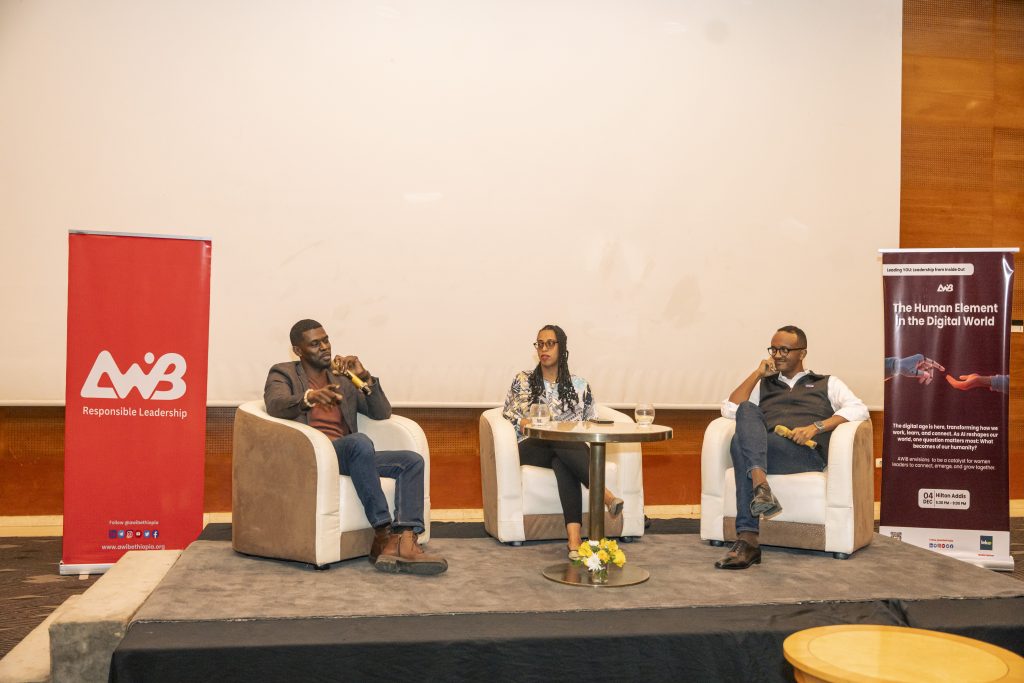
AWiBers and guests streamed into Hilton Addis on Thursday evening, December 4, 2025 to discuss the pertinent topic ‘The Human Element in the Digital World’. Networking flowed warmly as participants mingled and explored questions including which AI tools they use or have tried, what human elements remain irreplaceable by any technology, and which intentional habits can help preserve and strengthen uniquely human qualities in an AI-driven world.
AWiB’s 2025 President, Jamila Hamid, opened the session by introducing Helen Mesfin, Executive Producer and Host of The Helen Show on EBS TV. Helen presented the upcoming Empower Addis 2025 event, scheduled for December 13–14 at the Addis International Convention Center, an event that brings together visionary leaders, barrier-breaking creatives, entrepreneurs, and innovators across industries and generations. She invited attendees to join and be part of the experience.
Members showcasing their products also introduced themselves, including Yodit Belayeneh from Yodit Leather, Eyerusalem Dejene from Mesmer Products, and Tizita Wondimu from Smashing Design. Jamila then introduced the moderator of the evening, Helina Abye, AWiB’s Communications Lead with over seven years of digital content experience and a passion for technology, continuous learning, and empowering young women.
Helina introduced the speakers, Kidus Asfaw, CEO and Co-Founder of Kubik, and Amadou Daffe, CEO and Co-Founder of Gebeya. She then invited them to reflect on how empathy, ethics, and emotional intelligence can remain central as AI expands; the role of education in balancing technical fluency with critical thinking and emotional depth; how societies can address risks such as bias, misinformation, polarization, and privacy loss; and how African governments and businesses can design human-centered AI systems that uphold dignity, fairness, and inclusion.
Amadou began by grounding the conversation in African realities, noting that digitalization carries different meanings depending on context. He highlighted the disconnect between Western-built digital systems and African wisdom, culture, and lived experiences. This gap, he argued, raises urgent questions about how we educate our children and guide our teams in using new tools. He stressed the need for Africans to build their own digital systems that understand local contexts. He also emphasized that the current education system is not equipping African youth for the future, especially as knowledge-based roles become increasingly automated.
Kidus shared similar concerns but expanded on the nature of AI itself. He explained that AI is not magic but trillions of computers exchanging information through neural networks. He warned that within a decade, up to seventy-five percent of the world’s energy could be consumed by these systems. The pace of AI advancement, he noted, is alarming, and the age of human expertise in certain fields may diminish as AI performs tasks faster and cheaper. However,
Kidus emphasized that human strengths, such as emotional intelligence, creativity, empathy, and resilience, are irreplaceable. These qualities, shaped over millions of years of human experience, will determine who thrives. He encouraged the audience to see AI as a tool that frees time, allowing people to focus on connection, creativity, and adaptability. For future generations, he underscored the importance of choosing educational paths that build adaptability, communication, and strong networks.
Both speakers agreed that Africa faces additional challenges, including limited infrastructure to host large-scale data centers. This creates an even greater need for innovation, entrepreneurship, and education that prepares young people not for specific jobs but for a rapidly shifting digital reality. They noted that while certain sectors like farming and manufacturing may remain more stable in African contexts, the future belongs to those who can create solutions and adapt quickly.
Audience questions touched on topics such as the impact of digital tools on critical thinking, how parents can guide children in using AI responsibly, government restrictions on AI, and fears of an AI-dominated future. Questions were raised on how children could access sensitive topics such as illegal actions and self-harm. Kidus reassured participants that fear often comes from unfamiliarity, reminding them that society has resisted every major technological leap, from calculators to search engines. Mastery, not avoidance, is the key, and parents must learn AI tools themselves before guiding their children. Kidus noted it is important to keep in mind AI is a tool rather than building a relationship with it.
Amadou added that Africans can play an active role in shaping AI by inserting their own stories, cultures, and values. He shared how he uses AI to create African stories and cartoons for his child, modeling how technology can be used creatively rather than fearfully. Both speakers emphasized the importance of governments adapting swiftly and regulating AI responsibly, especially as the world approaches the era of artificial general intelligence. They noted that soft skills such as conflict resolution will not easily be taken over by digital systems, underlining that these skills are what young people should focus on going forward.
Helina thanked the speakers for their rich insights and Jamila presented them with gifts as per AWiB’s tradition. The evening concluded with the audience feeling more informed, grounded, and equipped to navigate the evolving digital age.
Share to your circles!