Why Women Are Our Gems
A Case for ElevateHer
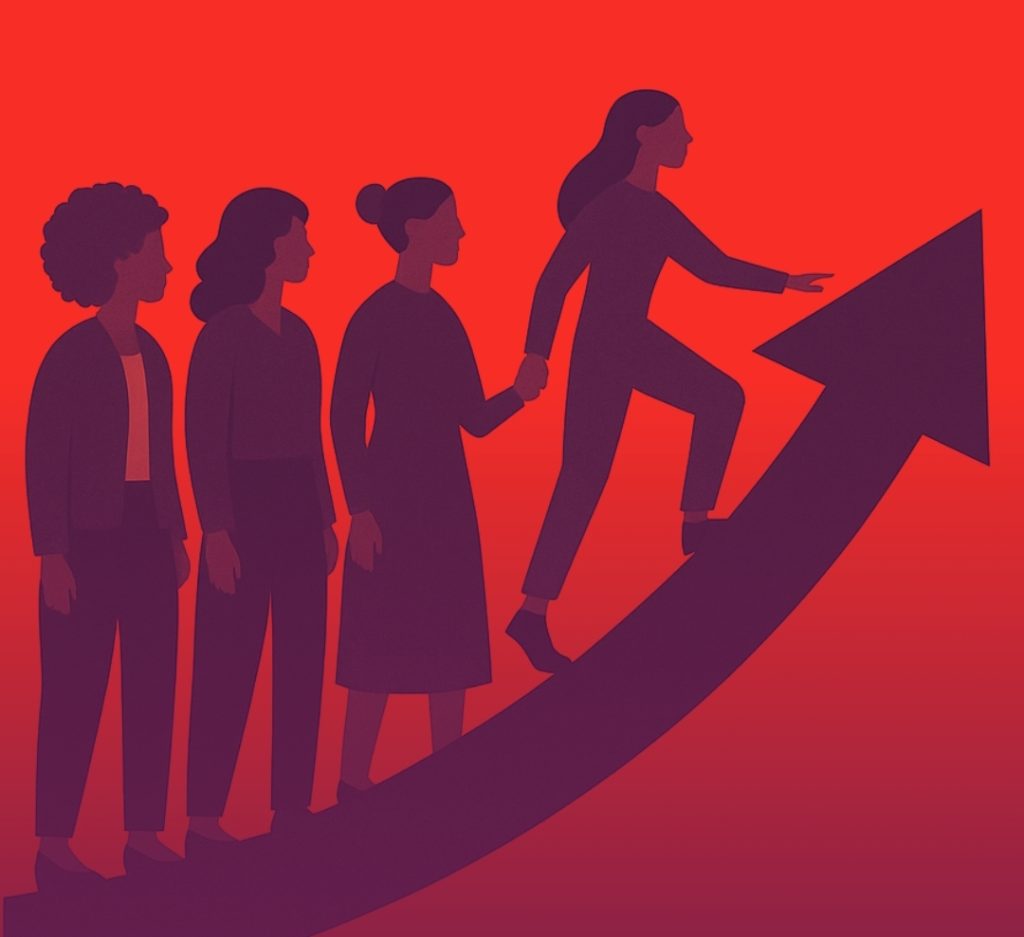
“There is no tool for development more effective than the empowerment of women.” — Kofi Annan
AWiB launched ElevateHer in February 2025, a visionary campaign designed to create sustainable partnerships with businesses and organizations that believe in the power of women. ElevateHer aims to connect women with decision-makers, resources, and networks that unlock opportunity and growth. The campaign encourages corporations, nonprofits, and stakeholders to invest in women, not merely as an act of inclusion, but as a strategy for innovation and impact.
In the 21st century, women have emerged as one of the most transformative forces in economic growth, social cohesion, and community resilience. And yet, gender inequality persists across many spheres of life, from underrepresentation in leadership roles to limited access to capital and decision-making. According to the World Economic Forum’s Global Gender Gap Report 2024, it is estimated to take over 130 years to close the global gender gap at the current pace of progress. In Ethiopia, women continue to face deep-rooted challenges related to cultural expectations, access to education, and participation in formal economic sectors.
This paper makes the case that investing in women is one of the most powerful levers for societal transformation. When women are supported, empowered, and included, the benefits ripple outward, to their families, their workplaces, and their communities. Drawing on global research and local context, and building on the foundation laid by ElevateHer, this paper argues that women are not just participants in development, they are multipliers of prosperity. The following sections will explore how women shape progress at home, in the workplace, and across communities, and why investing in women employees is not only ethical but also a smart business and organizational strategy.
Women at Home: The Ripple Effect of Empowerment
The home is the first economy, and women are often at its helm. While their contributions have traditionally been undervalued in formal economic measurements, evidence increasingly shows that empowering women at home leads to measurable gains in health, education, financial stability, and overall well-being for families and future generations.
The Multiplier Effect Begins at Home
Research by the World Bank and UN Women consistently shows that women are more likely than men to invest their income in their children’s health, education, and nutrition. A UNICEF report highlights that a child is 20% more likely to survive when the mother controls the household budget. This economic behavior, often termed the “multiplier effect,” means that each Birr earned or saved by a woman produces broader social returns.
In Ethiopia, where a large percentage of the population relies on informal economies and subsistence agriculture, empowering women in the household directly correlates with poverty reduction. Studies conducted by the Ethiopian Development Research Institute (EDRI) demonstrate that households led by educated or financially literate women are more likely to engage in long-term financial planning, keep girls in school, and access health services.
- Intergenerational Impact: Education and Leadership at the Roots
One of the most profound impacts of empowering women at home is the intergenerational effect. When mothers are educated, their children are more likely to complete school, marry later, and achieve better health outcomes. According to UNESCO, a mother’s education level is one of the strongest predictors of a child’s academic success.
- Economic Empowerment in Informal Spaces
While formal employment may still be out of reach for many Ethiopian women due to socio-economic and cultural constraints, women are actively participating in the economy through micro-enterprises, household businesses, and agricultural activities. However, they face disproportionate barriers in accessing finance, markets, and training. Programs that provide microloans and business skills to women have proven especially effective.
- Mental Health, Self-worth, and Role Modeling
Empowerment is not only economic, it’s also psychological. When women feel valued and seen within their homes, they are more confident, less susceptible to domestic violence, and more likely to raise children with healthy emotional regulation. A study by UNFPA Ethiopia found that women with access to empowerment programs report higher life satisfaction, better mental health, and stronger communication with their children.
Moreover, empowered women become visible role models for daughters and sons alike. They demonstrate that leadership, strength, and decision-making are not gendered traits, but human ones. This challenges patriarchal norms and shifts societal expectations.
Women in the Workplace: The Corporate Advantage
While gender inclusion is often framed as a moral or social issue, an equally compelling argument exists in the economic realm: empowering women in the workplace improves business performance. Corporations around the world are discovering that when women are fully included in leadership and workforce pipelines, they outperform their peers in innovation, revenue, and resilience.
- The Business Case for Gender Diversity
Studies from McKinsey & Company show that companies in the top quartile for gender diversity are 25% more likely to outperform their peers financially. Diverse teams bring different viewpoints, skills, and networks, contributing to more holistic decision-making and fewer blind spots. In a time when businesses are navigating complex challenges; climate, technology, consumer behavior shifts, diversity is not a luxury but a necessity.
A 2023 International Monetary Fund (IMF) study on sub-Saharan Africa concluded that closing gender gaps in the labor force could raise GDP per capita by an average of 35%. For Ethiopia, where the gender gap in formal employment remains wide, the untapped potential is even more dramatic.
- Improved Collaboration and Innovation
Women leaders tend to exhibit inclusive leadership styles, prioritizing listening, empathy, and consensus-building. These traits are not only valuable in managing diverse teams, but also in building adaptive, innovative organizations. A report by Harvard Business Review highlighted that companies with women in top management roles were significantly more innovative, as women bring fresh insights based on lived experiences.
At Ethio Telecom, for example, leadership training programs for women have helped shift the internal culture, opening space for dialogue, cross-functional team collaboration, and new product development that appeals to a wider demographic.
- Employee Engagement and Retention
Workplaces that actively support women through equitable policies and inclusive cultures see higher engagement and lower turnover rates. According to Gallup, engaged employees are 21% more productive and 59% less likely to look for another job. Women, in particular, are more likely to stay in organizations where they feel safe, respected, and given equal opportunity to grow.
In Ethiopia, firms like Dashen Bank have started women-focused mentorship programs and leadership tracks that not only elevate women but also attract top female talent who would otherwise seek opportunities abroad or in the NGO sector.
- Examples from Ethiopia and Africa
Across the continent, more African companies are realizing the benefits of investing in women. Rwanda’s Bank of Kigali, led by female CEO Dr. Diane Karusisi, is a model for inclusive leadership. Similarly, in Ethiopia, Enat Bank, founded by women and serving women-centric financial services, illustrates how focusing on female empowerment can carve out a powerful market niche.
These examples serve to affirm that diversity is not merely about representation, it is about value creation, innovation, and long-term business health.
Women in the Community: Engines of Change
Empowering women does not stop at the workplace; it expands into schools, community halls, and public discourse. Women are the backbone of civil society. When empowered, they become the catalysts for inclusive governance, improved health outcomes, and grassroots development.
- Civic and Grassroots Leadership
Across Africa, women lead community-based organizations that support education, combat gender-based violence, and improve access to health. These women may not hold formal political positions, but their informal influence is profound.
In Ethiopia, women-led Idir and Mahiber associations act as support systems for families in crisis, while informal cooperatives like Equb help women access loans, start businesses, and share market knowledge. These community institutions are not just economic, they are also social safety nets that promote resilience.
- Social Enterprises and Nonprofits
Women are increasingly founding social enterprises that combine profit with purpose. These businesses are often more inclusive and sustainable, focusing on solving local challenges. From menstrual hygiene products to climate adaptation technologies, women-led innovation is growing.
- Gender Equality and the SDGs
Empowering women is central to the Sustainable Development Goals (SDG 5), but it also accelerates other goals: no poverty, good health, quality education, and reduced inequalities. The UN Women “Gender Equality as a Catalyst” report shows that when women participate fully in civic and economic life, societies are more democratic, peaceful, and resilient.
In short, when women rise, communities stabilize and thrive. Whether through informal leadership or formal enterprise, women shape the moral and practical backbone of Ethiopia’s progress.
The Corporate Imperative: Why Invest in Women Employees
Corporations increasingly understand that building a gender-inclusive culture isn’t just the right thing to do, it’s the strategic thing to do. Investing in women employees means creating environments where leadership, productivity, and profitability flourish.
- Return on Investment
When companies invest in women, the return is measurable. According to Credit Suisse, companies with women on their boards deliver higher return on equity and better average growth. These firms are also more likely to adopt progressive policies that protect workers, boost engagement, and drive long-term performance.
In Ethiopia, where female labor force participation lags behind male counterparts, the private sector stands to gain significantly from recruiting, retaining, and advancing women in meaningful roles. This is especially relevant in finance, healthcare, technology, and agriculture, industries where diversity can contribute to innovation and empathy-driven services.
- Internal Policies That Make a Difference
Supportive HR practices matter. Companies that offer flexible working hours, maternity leave, parental benefits, childcare support, and gender equity audits attract more women and promote retention.
The Ethiopian ICT firm Apposit introduced a flexible work-from-home policy to support women employees during and after maternity, resulting in higher retention rates and better morale. Similarly, EthSwitch has begun incorporating gender equity into its leadership evaluation, ensuring that inclusion is linked to performance reviews.
- Leadership Pipelines
Training and mentorship are critical in helping women advance into leadership roles. Programs such as Lean In Circles, employee resource groups (ERGs), and women’s leadership academies prepare women for executive roles and strengthen organizational loyalty.
- Call to Action for Business Partners
ElevateHer is not a charity, it is a strategic investment in people capital. AWiB invites corporations to support its transformative professional and personal development programs and its networking platforms.
Conclusion & Recommendations
Women are not a marginal group, they are the central axis of growth, sustainability, and transformation. At home, they multiply benefits through caregiving, education, and savings. In the workplace, they bring collaboration, innovation, and accountability. In the community, they lead from the grassroots, building bridges where systems fail.
Key Recommendations
For Policymakers:
- Enact and enforce equal pay laws.
- Provide incentives for companies with gender-inclusive hiring practices.
- Fund women-focused leadership and entrepreneurship programs.
For Organizations:
- Join ElevateHer as partners.
- Audit internal policies for gender equity.
- Invest in leadership development for women employees.
For Society:
- Shift cultural narratives around women’s roles.
- Support female entrepreneurship and education.
- Recognize unpaid care work as a public good.
In closing, women are not waiting to be saved, they are rising. But to accelerate this rise, systems and structures must align with their potential. To elevate women is to elevate the nation, because women are our gems.
Join AWiB Connects @ the Hilton July 3 to discuss why each person (women and men) are AWiB’s Gems and how they contribute to a thriving home, workplace, community and nation.
References
- World Economic Forum (2024), Global Gender Gap Report https://www.weforum.org/reports/global-gender-gap-report-2024
- McKinsey & Company (2020), Diversity Wins: How Inclusion Matters
- International Monetary Fund (2023), Gender Equality and Inclusive Growth in Sub-Saharan Africa
- UN Women (2023), Gender Equality as a Catalyst for Development
- UNICEF (2021), The Power of Women’s Economic Participation
- Harvard Business Review (2022), How Women Drive Innovation
- Credit Suisse (2021), The CS Gender 3000 Report
- Gallup (2021), State of the Global Workplace
- Ethiopian Development Research Institute (EDRI, 2021), Household Behavior and Gender Roles in Ethiopia
- AWiB (2025), ElevateHer: A Quest for Business Partnerships
Share to your circles!