Innovation Towards a Sustainable Environment Recap
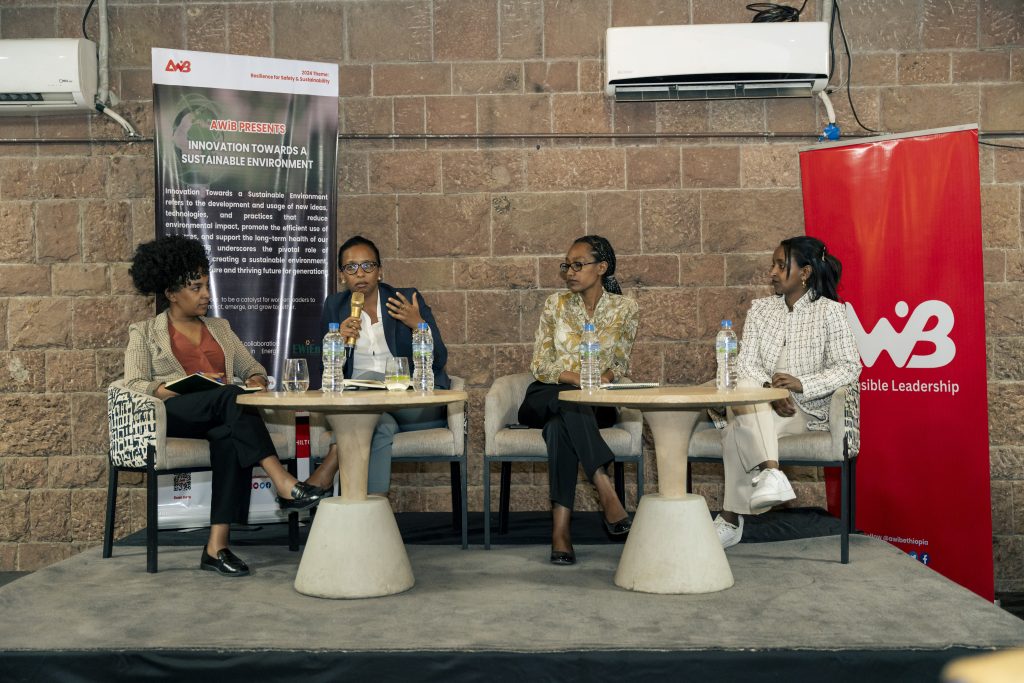
The final AWiB monthly event of 2024 was a lively and engaging gathering, setting the stage for meaningful connections. By 5:00 PM, the networking hall was buzzing with activity as participants from diverse backgrounds and industries filled the space. Ideas were exchanged, experiences shared, and new collaborations sparked. After the networking session, the participants gathered in the dedicated hall to dive into the evening’s focus: Innovation towards a sustainable environment.
Ajebework Ali, an AWiB board member, opened the event with a warm welcome and expressions of gratitude. She introduced the event’s Emerge sponsors—Kurifu Hotels and Spa, Komari Beverages, and Wudasse Diagnostics—and thanked them for their support. Ajebework also invited three of AWiB’s members to showcase their products and services: Saron Tadesse from Maki Raisins, Yodit Gidey from GG Enterprise, and Fitsum Atnafework Kidanemariam, an author and trainer. Each of them
The evening’s moderator, Amen Aniley, a passionate advocate for green energy and a representative of Ethiopian Women in Energy (EWiEn), skillfully framed the discussion. Amen introduced the concept of innovative sustainability—developing solutions that provide benefits across environmental, social, and economic systems. She then introduced the evening’s esteemed speakers, all influential members of EWiEn: Enes Abdella, Ethiopian Country Leader of the Global Energy Alliance for People and Planet, Atkilt Bekele, an investment and green energy professional, and Bethlehem Dejene, co-founder of Zafree Papers. These leaders brought a wealth of expertise and knowledge to the table, offering valuable insights into how sustainability and innovation intersect.
Enes Abdella was the first to speak, focusing on transformative programs that aim to tackle energy access and community empowerment. She highlighted the DREAM program, a groundbreaking initiative that uses distributed renewable energy to enhance agricultural productivity. By integrating energy and irrigation solutions, this program helps farmers increase their incomes while also promoting energy accessibility. Enes explained how this model is particularly beneficial for women, who are often the most affected by energy scarcity. She also discussed her work with the coffee sector, introducing the “Energizing Women in Agrobiology and Systems” initiative. This program enables women farmers to double their income by adding value to coffee production and using byproducts to create clean cooking solutions.
Next, Atkilt Bekele shared insights on Ethiopia’s green economy strategy, which aims to achieve middle-income status while prioritizing environmental preservation. Atkilt explained the four main pillars of Ethiopia’s strategy: modernizing agriculture, conserving forests, expanding renewable energy, and adopting energy-efficient technologies. She also discussed the key legislative actions that support this vision, including environmental impact assessments (EIA), which ensure transparency and accountability. She highlighted how forest development laws incentivize communities to engage in forest rehabilitation, and how waste management regulations are promoting the recycling of electronic waste. Furthermore, Atkilt discussed investment incentives for renewable energy, such as tax exemptions for capital goods imports, and outlined upcoming policies like a ban on single-use plastics and the phase-out of diesel vehicles in favor of electric ones. These measures reflect Ethiopia’s ongoing commitment to a more sustainable future.
Bethlehem Dejene, the founder of Zafree Papers, took the floor next, sharing her journey of building a business centered on sustainability. Bethlehem’s company creates eco-friendly paper products using banana fibers sourced from small-scale farmers. The byproducts from this process are then converted into organic fertilizers, benefiting both the farmers and the environment. Bethlehem discussed the challenges she has faced in scaling an eco-friendly business, particularly the high costs involved in proving concepts and making her products price-competitive. She emphasized the importance of forming corporate partnerships, such as her participation in the 100 Plus Accelerator Program, which helped connect Zafree Papers with global companies like Unilever and Coca-Cola. Through these partnerships, Bethlehem was able to conduct pilot tests, showcasing the feasibility of her products on a larger scale. She proudly shared that Zafree Papers has successfully produced Ethiopia’s first 100% virgin pulp-based paper, which is now being sold in markets of Belgium and South Africa.
Following the speakers’ discussion, the conversation turned to the audience, sparking an engaging discussion. Several important issues were raised regarding sustainability. One topic focused on the balance between individual and corporate responsibility in addressing environmental challenges, particularly in the context of single-use plastics and corporate emissions. Another question highlighted the environmental costs associated with green energy technologies, such as the raw materials required for the production of solar panels and wind turbines. These issues underscored the complexity of sustainability and the importance of taking a holistic approach to environmental impact.
One participant also brought up the lack of awareness among startups about carbon credits and other sustainability initiatives. This prompted a discussion on how local entrepreneurs in Ethiopia could gain better access to these opportunities, and how the government could help support green energy investments and tackle the regulatory challenges that hinder private sector involvement. The conversation highlighted the need for clearer pathways for startups to access carbon credits and other resources that could help them scale their sustainability efforts.
The discussion continued to explore a range of sustainability challenges, including the importance of forming global partnerships to scale businesses and foster growth. The need to establish strong networks that provide access to experience, connections, and funding was emphasized, particularly in the context of integrating sustainability into business practices. Corporate social responsibility (CSR) emerged as another critical point of discussion, with a focus on how businesses can respond to evolving regulations and adopt sustainable practices that are both socially and environmentally responsible.
Another topic that arose was the need for better sustainability education in Ethiopia, particularly in the hospitality sector. It was discussed on how both the public and private sectors must work together to promote sustainable sourcing, waste management, and broader sustainable practices. Additionally, concerns were raised about poor waste management systems in manufacturing companies, with a recommendation for stricter regulations and enforcement to address these challenges effectively.
The conversation also turned to renewable energy solutions, particularly for rural areas with limited access to electricity. The speakers suggested that small businesses in such areas could benefit from connecting with local renewable energy providers, as well as platforms like EWiEn that facilitate access to sustainable energy solutions.
As the discussion came to an end Yemisrach, a representative of Ethiopian Women in Energy (EWiEn), highlighted the organization’s ongoing efforts to support women in the energy sector and emphasized the importance of their involvement in sustainable development. She encouraged other women to join the group, stressing how climate change disproportionately affects women and how empowering them is vital for building a more sustainable future. The speakers echoed her message, highlighting the need for more women’s voices and leadership in sustainability and energy.
The session concluded with Ajebework Ali expressing heartfelt gratitude to the speakers for their valuable contributions and thanking the moderator for her excellent facilitation throughout the event. In recognition of their time and expertise, AWiB presented gifts to the speakers and the moderator as a token of appreciation for their insightful contributions during this impactful evening.
Share to your circles!